Chapter 8: Working with Fractions
๐Ÿ‡ฎ๐Ÿ‡ณ National Curriculum Standard โ–พ
๐Ÿ› Vidyoric Certified โ€ข Prof. Arvind Swaminathan
๐Ÿ”ฅ 0 days
โšก 0 Sparks +
Chapter 8: Working with Fractions

Video Lecture 1: Slicing Slices โ€” The Visual Reality of Multiplying Fractions

STEP 1: VIDEO LESSON ๐Ÿ“ค Uploaded HTML5 Video

๐Ÿ“‘ Interactive Chapter Bookmarks

5 chapters
00:00
Introduction & Overview

Syllabus scope and core objectives

โ–ถ
00:42
Multiplication Paradox

Detailed physical mechanism and derivations

โ–ถ
01:53
Visulizing Area Grids

High-yield board tips and pitfalls

โ–ถ
03:25
The Reciprocal Rule
โ–ถ
05:14
The Roadmap Ahead
โ–ถ

๐ŸŽ™๏ธ Synchronized Transcript

๐Ÿ”

Welcome back, young mathematicians!

In primary school, you learned an important rule: multiplication makes numbers bigger.

For example, four multiplied by five equals twenty. Twenty is greater than both four and five!

But now, in Grade 7, you encounter something surprising.

One-half multiplied by one-fourth equals one-eighth.

Wait a moment! One-eighth is smaller than both one-half and one-fourth!

Does this mean mathematics is breaking its own rules?

Not at all! The secret lies in understanding what multiplication means when we work with proper fractions.

When you multiply a whole number by another whole number, you are often increasing its size. But when you multiply by a proper fraction, you are taking a fraction of an existing quantity.

Think of it as slicing an already existing slice into even smaller portions.

Let us understand this visually.

### The Two-Dimensional Area Grid

Imagine a square representing one complete unit.

First, divide this square vertically into three equal columns. Now, shade two of these columns in blue. What fraction of the square have we shaded?

Two-thirds!

Next, divide the same square horizontally into four equal rows. Shade three of these rows in yellow.

We are now representing three-fourths of the square.

Look carefully at the diagram. Where the blue and yellow shaded regions overlap, a beautiful green region appears!

This overlapping region represents the product of two-thirds multiplied by three-fourths.

Now, let us count.

The entire square has been divided into three columns and four rows.

Therefore, the total number of small rectangles is three multiplied by four, which gives us twelve.

Next, count the green overlapping rectangles.

There are two selected columns and three selected rows.

Therefore, the overlapping region contains two multiplied by three, which gives us six rectangles.

So, six out of twelve rectangles represent the overlapping area.

That means the answer is six-twelfths, which simplifies to one-half!

Let us express this mathematically.

Two-thirds multiplied by three-fourths equals two multiplied by three, divided by three multiplied by four.

That gives us six-twelfths, which simplifies to one-half.

Here is the important mathematical rule:

When multiplying fractions, multiply the numerators together and multiply the denominators together.

The numerator represents the overlapping shaded portions, while the denominator represents the total number of equal partitions.

This is the visual foundation of fraction multiplication!

### Understanding Reciprocals and Inversion

Now, let us explore another important concept: reciprocals.

Look at the fraction three-fifths.

When we invert its numerator and denominator, it becomes five-thirds.

These two fractions are called reciprocals because their product is exactly one.

Three-fifths multiplied by five-thirds gives us fifteen-fifteenths, which equals one.

Similarly, the reciprocal of seven is one-seventh.

But why are reciprocals so important?

Because they help us understand fraction division!

In mathematics, dividing by a fraction is equivalent to multiplying by its reciprocal.

For example, dividing by two-thirds is exactly the same as multiplying by three-halves.

This principle is commonly remembered as the invert-and-multiply rule.

We will explore its mathematical reasoning and applications in greater detail in our upcoming lessons.

### Roadmap Ahead: Mastering Chapter Eight

Young mathematicians, we have now established the visual foundation of fraction multiplication.

But our journey through Chapter Eight is not finished!

We have four important stages ahead.

First, Fraction Multiplication, where we learn how fractions combine and how their values change.

Second, Division Mechanics, where we explore reciprocals and the invert-and-multiply principle.

Third, Mixed Numbers and Scaling, where we apply fraction operations to real-world measurements and proportions.

And finally, Diagnostic Mastery, where we solve challenging problems and test our mathematical understanding.

Remember, fractions are not merely numbers written above and below a line. They represent quantities, proportions, measurements, and relationships that appear everywhere around us.

From adjusting recipes to engineering measurements and economic calculations, fractions help us understand and solve real-world problems.

Keep observing, keep questioning, and keep calculating!

I am Prof. Arvind Swaminathan. Let us now dive into Concept Notes One and begin mastering the mathematics of fractions!
STEP 2 โ€ข CONCEPT NOTES โฑ๏ธ 3 min read
๐Ÿ“Œ 0 Notes

Concept Notes 1: Multiplication of Fractions & Area Models

Multiplication of fractions represents finding a fractional portion of an existing fractional quantity.
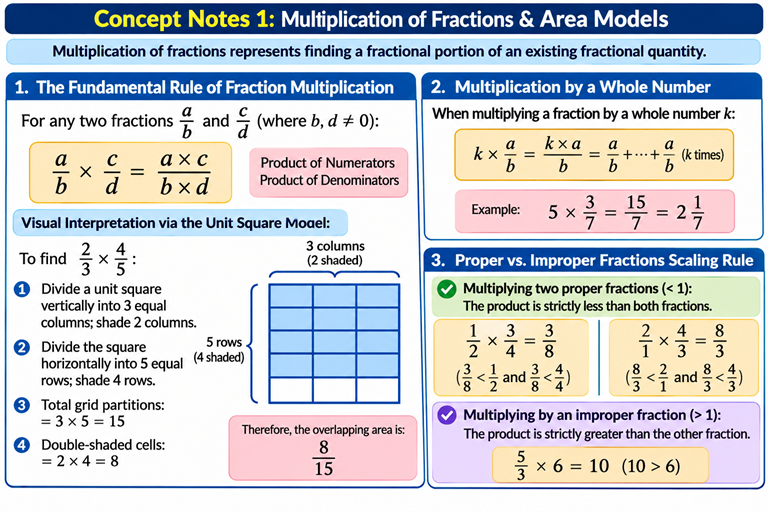
Figure 8.1: Visualizing Fraction Multiplication


1. The Fundamental Rule of Fraction Multiplication

For any two fractions $\frac{a}{b}$ and $\frac{c}{d}$ (where $b, d \neq 0$):

$$\frac{a}{b} \times \frac{c}{d} = \frac{a \times c}{b \times d} = \frac{\text{Product of Numerators}}{\text{Product of Denominators}}$$
Visual Interpretation via the Unit Square Model:
  • To find $\frac{2}{3} \times \frac{4}{5}$:
  • Divide a unit square vertically into $3$ equal columns; shade $2$ columns.
  • Divide the square horizontally into $5$ equal rows; shade $4$ rows.
  • Total grid partitions formed $= 3 \times 5 = 15$.
  • Number of double-shaded overlapping cells $= 2 \times 4 = 8$.
  • Therefore, the overlapping area is $\mathbf{\frac{8}{15}}$.

2. Multiplication by a Whole Number

When multiplying a fraction by a whole number $k$:

$$k \times \frac{a}{b} = \frac{k}{1} \times \frac{a}{b} = \frac{k \times a}{b}$$
Example: $5 \times \frac{3}{7} = \frac{15}{7} = 2 \frac{1}{7}$.

3. Proper vs. Improper Fractions Scaling Rule

  • Multiplying two proper fractions ($< 1$): The product is strictly less than both fractions:
$$\frac{1}{2} \times \frac{3}{4} = \frac{3}{8} \quad \left(\frac{3}{8} < \frac{1}{2} \text{ and } \frac{3}{8} < \frac{3}{4}\right)$$
  • Multiplying by an improper fraction ($> 1$): The product is strictly greater than the other fraction:
$$\frac{5}{3} \times 6 = 10 \quad (10 > 6)$$
๐Ÿ“
Comprehensive High-Yield Mathematical Relations & Theorems

Complete step-by-step derivations, step traps, and LaTeX formula sheet breakdowns...

๐Ÿ”’

End of Free Notes Preview

Unlock the complete deck to access full LaTeX formula breakdowns, interactive diagrams, exam traps, and personal margin highlights!

๐Ÿ”‘ Sign In / Register Free
๐Ÿง  Review Due (Interval: 1 Day) Card 1 of 8 (SM-2 Active Recall)
QUESTION (FRONT) Space โ†ต to flip
What is the product of 3/5 and 2/7?
ANSWER & EXPLANATION (BACK) Space โ†ต to flip
6/35. (Product of numerators: 3 * 2 = 6; product of denominators: 5 * 7 = 35).
๐Ÿ’ก
Tap Card to Flip & Check Your Answer Active recall prompt: Flip the card or press Space โ†ต to unlock the SM-2 recall difficulty rating.
๐Ÿ”’
Step 4 is Locked

Final Comprehensive Diagnostic Assessment (15 MCQs)

This ๐Ÿ“ LaTeX Concept Notes is part of the full verified curriculum for Chapter 8: Working with Fractions. Unlock the full deck to gain permanent access to all 11 interactive stages, active recall cards, and diagnostic checkpoints.

Deck Access Price
100% Free with Account
Instant Access
โœ“ UPI & Cards Supported
๐Ÿ”‘ Sign In / Register to Unlock Free →
๐Ÿ”’
Step 5 is Locked

Final Comprehensive Diagnostic Assessment (15 MCQs)

This โšก Diagnostic Quiz is part of the full verified curriculum for Chapter 8: Working with Fractions. Unlock the full deck to gain permanent access to all 11 interactive stages, active recall cards, and diagnostic checkpoints.

Deck Access Price
100% Free with Account
Instant Access
โœ“ UPI & Cards Supported
๐Ÿ”‘ Sign In / Register to Unlock Free →
๐Ÿ”’
Step 6 is Locked

Final Comprehensive Diagnostic Assessment (15 MCQs)

This Microlearning Step is part of the full verified curriculum for Chapter 8: Working with Fractions. Unlock the full deck to gain permanent access to all 11 interactive stages, active recall cards, and diagnostic checkpoints.

Deck Access Price
100% Free with Account
Instant Access
โœ“ UPI & Cards Supported
๐Ÿ”‘ Sign In / Register to Unlock Free →
๐Ÿ”’
Step 7 is Locked

Final Comprehensive Diagnostic Assessment (15 MCQs)

This ๐ŸŽฅ Video Lesson is part of the full verified curriculum for Chapter 8: Working with Fractions. Unlock the full deck to gain permanent access to all 11 interactive stages, active recall cards, and diagnostic checkpoints.

Deck Access Price
100% Free with Account
Instant Access
โœ“ UPI & Cards Supported
๐Ÿ”‘ Sign In / Register to Unlock Free →
๐Ÿ”’
Step 8 is Locked

Final Comprehensive Diagnostic Assessment (15 MCQs)

This ๐Ÿ“ LaTeX Concept Notes is part of the full verified curriculum for Chapter 8: Working with Fractions. Unlock the full deck to gain permanent access to all 11 interactive stages, active recall cards, and diagnostic checkpoints.

Deck Access Price
100% Free with Account
Instant Access
โœ“ UPI & Cards Supported
๐Ÿ”‘ Sign In / Register to Unlock Free →
๐Ÿ”’
Step 9 is Locked

Final Comprehensive Diagnostic Assessment (15 MCQs)

This ๐Ÿง  Active Recall Flashcards is part of the full verified curriculum for Chapter 8: Working with Fractions. Unlock the full deck to gain permanent access to all 11 interactive stages, active recall cards, and diagnostic checkpoints.

Deck Access Price
100% Free with Account
Instant Access
โœ“ UPI & Cards Supported
๐Ÿ”‘ Sign In / Register to Unlock Free →
๐Ÿ”’
Step 10 is Locked

Final Comprehensive Diagnostic Assessment (15 MCQs)

This ๐Ÿ“ LaTeX Concept Notes is part of the full verified curriculum for Chapter 8: Working with Fractions. Unlock the full deck to gain permanent access to all 11 interactive stages, active recall cards, and diagnostic checkpoints.

Deck Access Price
100% Free with Account
Instant Access
โœ“ UPI & Cards Supported
๐Ÿ”‘ Sign In / Register to Unlock Free →
๐Ÿ”’
Step 11 is Locked

Final Comprehensive Diagnostic Assessment (15 MCQs)

This โšก Diagnostic Quiz is part of the full verified curriculum for Chapter 8: Working with Fractions. Unlock the full deck to gain permanent access to all 11 interactive stages, active recall cards, and diagnostic checkpoints.

Deck Access Price
100% Free with Account
Instant Access
โœ“ UPI & Cards Supported
๐Ÿ”‘ Sign In / Register to Unlock Free →