Chapter 12: Another Peek Beyond the Point
๐Ÿ‡ฎ๐Ÿ‡ณ National Curriculum Standard โ–พ
๐Ÿ› Vidyoric Certified โ€ข Prof. Arvind Swaminathan
๐Ÿ”ฅ 0 days
โšก 0 Sparks +
Chapter 12: Another Peek Beyond the Point

Video Lecture 1: Shifting the Point โ€” The Physics of Decimal Multiplication

STEP 1: VIDEO LESSON ๐Ÿ“ค Uploaded HTML5 Video

๐Ÿ“‘ Interactive Chapter Bookmarks

6 chapters
00:00
Introduction & Overview

Syllabus scope and core objectives

โ–ถ
00:43
Decimal : A Quick Recap

Detailed physical mechanism and derivations

โ–ถ
01:20
Dividing By Powers Of 10

High-yield board tips and pitfalls

โ–ถ
02:08
Real-World Math
โ–ถ
02:58
Decimal Multiplication
โ–ถ
04:01
Does It Bigger
โ–ถ

๐ŸŽ™๏ธ Synchronized Transcript

๐Ÿ”

Welcome back, young mathematicians!

Today, we are going to explore the fascinating world of decimal multiplication and percentages.

Have you ever wondered why multiplying a decimal number by ten, one hundred, or one thousand changes the position of its decimal point?

Let us discover the mathematical logic behind this interesting behaviour.

### Multiplying Decimals by Powers of Ten

Look at the number three point seven five four displayed on our digital glassboard.

What happens when we multiply this number by ten?

Every digit moves one place towards a higher place value.

The three units become three tens, and the seven tenths become seven units.

To represent this change mathematically, the decimal point moves one place to the right.

Therefore, three point seven five four multiplied by ten equals thirty-seven point five four.

Now, let us multiply the same number by one hundred.

Since one hundred contains two zeros, the decimal point moves two places to the right.

The answer becomes three hundred and seventy-five point four.

What happens when we multiply by one thousand?

Now, the decimal point moves three places to the right.

Our answer becomes three thousand seven hundred and fifty-four.

Let us remember this important pattern.

Multiplying by ten moves the decimal point one place to the right.

Multiplying by one hundred moves it two places to the right.

And multiplying by one thousand moves it three places to the right.

If necessary, we can add zeros to complete the required number of places.

This is the basic rule for multiplying decimal numbers by powers of ten.

### Multiplying a Decimal by Another Decimal

Now, let us explore something slightly more challenging.

How do we multiply two decimal numbers, such as zero point two five multiplied by zero point three?

We can solve this problem using a simple three-step method.

**Step One: Multiply Without Decimal Points.**

Temporarily ignore the decimal points and multiply the numbers as whole numbers.

Twenty-five multiplied by three gives us seventy-five.

**Step Two: Count the Decimal Places.**

Look at the original numbers.

Zero point two five contains two digits after the decimal point.

Zero point three contains one digit after the decimal point.

Therefore, the total number of decimal places is two plus one, which equals three.

**Step Three: Place the Decimal Point.**

Starting from the right side of seventy-five, count three places towards the left.

Since we do not have enough digits, we add a zero before seventy-five.

The result becomes zero point zero seven five.

Therefore, zero point two five multiplied by zero point three equals zero point zero seven five.

But why does this method work?

Let us understand the mathematical reasoning.

Zero point two five can be written as twenty-five divided by one hundred.

Similarly, zero point three can be written as three divided by ten.

When we multiply them, we get seventy-five divided by one thousand.

And seventy-five divided by one thousand equals zero point zero seven five.

This explains why we count the total decimal places before placing the decimal point.

The method is based on the fundamental principle of place value!

### Understanding Percentages: The Magic Ratio Out of One Hundred

Now, let us move to another important mathematical concept: percentages.

Imagine a square divided into one hundred equal small cells.

Thirty-five of these cells are shaded in golden colour.

What fraction of the square is shaded?

Thirty-five out of one hundred!

We can write this as thirty-five divided by one hundred.

In decimal form, it becomes zero point three five.

And in percentage form, it becomes thirty-five percent.

But what exactly does the word percentage mean?

The word comes from the Latin expression *per centum*, which means out of every hundred.

Therefore, a percentage is simply a way of expressing a quantity as a fraction with one hundred as its denominator.

For example, thirty-five percent means thirty-five out of every hundred.

Now, how do we convert fractions into percentages?

The rule is simple.

Multiply the fraction by one hundred percent.

Consider three-fourths.

Multiply three-fourths by one hundred percent.

The result is seventy-five percent.

Therefore, three-fourths is equal to seventy-five percent.

What about converting decimals into percentages?

Here is another useful shortcut!

Move the decimal point two places to the right and write the percentage symbol.

For example, zero point six eight becomes sixty-eight percent.

Similarly, zero point zero five becomes five percent.

Remember these two important conversions:

Fractions can be converted into percentages by multiplying by one hundred percent.

Decimals can be converted into percentages by moving the decimal point two places to the right.

### Roadmap Ahead: Mastering Chapter Twelve

Young mathematicians, we have now explored three important mathematical ideas.

First, we learned how multiplying by powers of ten changes the position of decimal points.

Second, we understood the three-step method for multiplying decimal numbers.

Third, we discovered how fractions, decimals, and percentages are connected through the concept of one hundred.

But our journey through Chapter Twelve continues!

There are four important stages ahead.

First, Decimal Multiplication, where we strengthen our calculation techniques.

Second, Decimal Division, where we learn how to divide decimal numbers accurately.

Third, Percentage Conversions, where we connect fractions, decimals, and percentages.

And finally, Diagnostic Mastery, where we test our understanding through challenging mathematical problems.

Remember, decimals and percentages are essential tools in everyday life.

From calculating retail discounts to understanding scientific concentrations and financial measurements, these concepts help us make accurate decisions.

I am Prof. Arvind Swaminathan.

Let us now move into Concept Notes One and continue our journey towards mastering decimal mathematics!
STEP 2 โ€ข CONCEPT NOTES โฑ๏ธ 3 min read
๐Ÿ“Œ 0 Notes

Concept Notes 1: Multiplication of Decimals

Multiplying decimal numbers combines whole-number multiplication with systematic decimal place tracking.
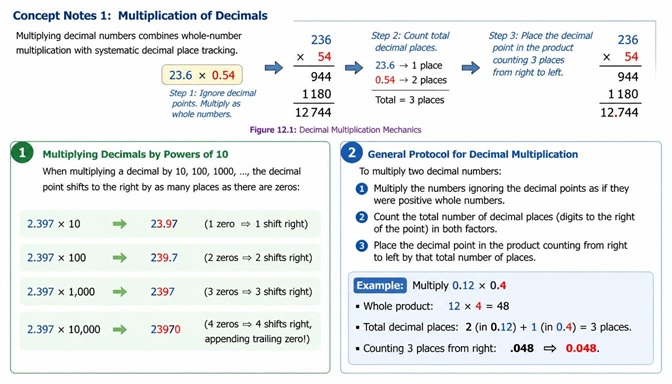
Figure 12.1: Decimal Multiplication Mechanics


1. Multiplying Decimals by Powers of 10

When multiplying a decimal by $10, 100, 1000, \dots$, the decimal point shifts to the right by as many places as there are zeros:

  • $2.397 \times 10 = \mathbf{23.97}$ (1 zero $\implies$ 1 shift right)
  • $2.397 \times 100 = \mathbf{239.7}$ (2 zeros $\implies$ 2 shifts right)
  • $2.397 \times 1,000 = \mathbf{2397}$ (3 zeros $\implies$ 3 shifts right)
  • $2.397 \times 10,000 = \mathbf{23970}$ (4 zeros $\implies$ 4 shifts right, appending trailing zero!)

2. General Protocol for Decimal Multiplication

To multiply two decimal numbers:

  1. Multiply the numbers ignoring the decimal points as if they were positive whole numbers.
  2. Count the total number of decimal places (digits to the right of the point) in both factors.
  3. Place the decimal point in the product counting from right to left by that total number of places.
๐Ÿ’ก
Example: Multiply $0.12 \times 0.4$: - Whole product: $12 \times 4 = 48$. - Total decimal places: $2 \text{ (in } 0.12) + 1 \text{ (in } 0.4) = 3$ places. - Counting 3 places from right: $.048 \implies \mathbf{0.048}$.
๐Ÿ“
Comprehensive High-Yield Mathematical Relations & Theorems

Complete step-by-step derivations, step traps, and LaTeX formula sheet breakdowns...

๐Ÿ”’

End of Free Notes Preview

Unlock the complete deck to access full LaTeX formula breakdowns, interactive diagrams, exam traps, and personal margin highlights!

๐Ÿ”‘ Sign In / Register Free
๐Ÿง  Review Due (Interval: 1 Day) Card 1 of 8 (SM-2 Active Recall)
QUESTION (FRONT) Space โ†ต to flip
Which direction does the decimal point shift when multiplying by 100?
ANSWER & EXPLANATION (BACK) Space โ†ต to flip
2 places to the RIGHT.
๐Ÿ’ก
Tap Card to Flip & Check Your Answer Active recall prompt: Flip the card or press Space โ†ต to unlock the SM-2 recall difficulty rating.
๐Ÿ”’
Step 4 is Locked

Final Comprehensive Diagnostic Assessment (15 MCQs)

This ๐Ÿ“ LaTeX Concept Notes is part of the full verified curriculum for Chapter 12: Another Peek Beyond the Point. Unlock the full deck to gain permanent access to all 11 interactive stages, active recall cards, and diagnostic checkpoints.

Deck Access Price
100% Free with Account
Instant Access
โœ“ UPI & Cards Supported
๐Ÿ”‘ Sign In / Register to Unlock Free →
๐Ÿ”’
Step 5 is Locked

Final Comprehensive Diagnostic Assessment (15 MCQs)

This โšก Diagnostic Quiz is part of the full verified curriculum for Chapter 12: Another Peek Beyond the Point. Unlock the full deck to gain permanent access to all 11 interactive stages, active recall cards, and diagnostic checkpoints.

Deck Access Price
100% Free with Account
Instant Access
โœ“ UPI & Cards Supported
๐Ÿ”‘ Sign In / Register to Unlock Free →
๐Ÿ”’
Step 6 is Locked

Final Comprehensive Diagnostic Assessment (15 MCQs)

This Microlearning Step is part of the full verified curriculum for Chapter 12: Another Peek Beyond the Point. Unlock the full deck to gain permanent access to all 11 interactive stages, active recall cards, and diagnostic checkpoints.

Deck Access Price
100% Free with Account
Instant Access
โœ“ UPI & Cards Supported
๐Ÿ”‘ Sign In / Register to Unlock Free →
๐Ÿ”’
Step 7 is Locked

Final Comprehensive Diagnostic Assessment (15 MCQs)

This ๐ŸŽฅ Video Lesson is part of the full verified curriculum for Chapter 12: Another Peek Beyond the Point. Unlock the full deck to gain permanent access to all 11 interactive stages, active recall cards, and diagnostic checkpoints.

Deck Access Price
100% Free with Account
Instant Access
โœ“ UPI & Cards Supported
๐Ÿ”‘ Sign In / Register to Unlock Free →
๐Ÿ”’
Step 8 is Locked

Final Comprehensive Diagnostic Assessment (15 MCQs)

This ๐Ÿ“ LaTeX Concept Notes is part of the full verified curriculum for Chapter 12: Another Peek Beyond the Point. Unlock the full deck to gain permanent access to all 11 interactive stages, active recall cards, and diagnostic checkpoints.

Deck Access Price
100% Free with Account
Instant Access
โœ“ UPI & Cards Supported
๐Ÿ”‘ Sign In / Register to Unlock Free →
๐Ÿ”’
Step 9 is Locked

Final Comprehensive Diagnostic Assessment (15 MCQs)

This ๐Ÿง  Active Recall Flashcards is part of the full verified curriculum for Chapter 12: Another Peek Beyond the Point. Unlock the full deck to gain permanent access to all 11 interactive stages, active recall cards, and diagnostic checkpoints.

Deck Access Price
100% Free with Account
Instant Access
โœ“ UPI & Cards Supported
๐Ÿ”‘ Sign In / Register to Unlock Free →
๐Ÿ”’
Step 10 is Locked

Final Comprehensive Diagnostic Assessment (15 MCQs)

This ๐Ÿ“ LaTeX Concept Notes is part of the full verified curriculum for Chapter 12: Another Peek Beyond the Point. Unlock the full deck to gain permanent access to all 11 interactive stages, active recall cards, and diagnostic checkpoints.

Deck Access Price
100% Free with Account
Instant Access
โœ“ UPI & Cards Supported
๐Ÿ”‘ Sign In / Register to Unlock Free →
๐Ÿ”’
Step 11 is Locked

Final Comprehensive Diagnostic Assessment (15 MCQs)

This โšก Diagnostic Quiz is part of the full verified curriculum for Chapter 12: Another Peek Beyond the Point. Unlock the full deck to gain permanent access to all 11 interactive stages, active recall cards, and diagnostic checkpoints.

Deck Access Price
100% Free with Account
Instant Access
โœ“ UPI & Cards Supported
๐Ÿ”‘ Sign In / Register to Unlock Free →