Chapter 1: The Ever-Evolving World of Science
๐Ÿ‡ฎ๐Ÿ‡ณ National Curriculum Standard โ–พ
๐Ÿ› Vidyoric Certified โ€ข Dr. Ananya Sharma
๐Ÿ”ฅ 0 days
โšก 0 Sparks +
Chapter 1: The Ever-Evolving World of Science

Video Lecture 1: The Spirit of Science โ€” Observation, Curiosity, and Hypotheses

STEP 1: VIDEO LESSON ๐Ÿ“ค Uploaded HTML5 Video

๐Ÿ“‘ Interactive Chapter Bookmarks

5 chapters
00:00
Introduction & Overview

Syllabus scope and core objectives

โ–ถ
01:00
Redefining Science

Detailed physical mechanism and derivations

โ–ถ
01:30
interconnected Web

High-yield board tips and pitfalls

โ–ถ
03:25
The Greter Purpose
โ–ถ
05:30
The Unending Quest
โ–ถ

๐ŸŽ™๏ธ Synchronized Transcript

๐Ÿ”
Hello, young scientists!

Today, we are going to begin an exciting journey into the world of science.

Have you ever looked at the night sky and wondered why stars twinkle? Or have you ever watched an apple fall from a tree and wondered why it falls down instead of floating upwards?

Asking such questions is where science begins.

Science is not just about reading textbooks or memorising difficult facts. Science is about observing the world around us, asking questions, conducting experiments, and discovering new things.

Many great scientific discoveries began with a simple question.

Why does something happen?
Can we test it?
What happens if we change something?

Such questions lead to new ideas. Scientists test these ideas through experiments and gain new knowledge from the results.

So, remember, curiosity and the habit of asking questions are the first steps towards learning science.

Scene 2: The Important Steps of the Scientific Method (01:30 โ€“ 03:45)
Visual Direction: An animated wheel showing the steps of the scientific method appears on the screen. Each step lights up one by one, with arrows connecting the stages.

Narration:

Now, let us understand how scientists find answers to different questions.

Scientists follow a systematic process known as the Scientific Method.

This method includes six important steps.

Step 1 โ€“ Observation:

Carefully watching and studying things happening around us is called observation.

We use our sense organs, such as our eyes and ears, along with tools like magnifying glasses, microscopes, and measuring instruments.

For example, we observe that a plant grows towards sunlight.

Step 2 โ€“ Asking Questions:

After making an observation, we ask a clear and specific question about it.

For example, why does a plant grow towards sunlight?

Step 3 โ€“ Forming a Hypothesis:

A hypothesis is a possible explanation or a testable prediction about something we observe.

For example, we may predict that plants need sunlight to grow.

This idea must be tested through an experiment.

Step 4 โ€“ Conducting a Controlled Experiment:

Scientists conduct experiments to test their hypotheses.

During an experiment, they change one important factor while keeping other conditions as similar as possible.

For example, take two similar plants. Keep one plant in sufficient sunlight and the other in a place with very little sunlight.

Step 5 โ€“ Collecting and Analysing Data:

The information collected during an experiment is carefully recorded.

Scientists use measurements, numbers, tables, and graphs to analyse the results.

This helps them understand what happened during the experiment.

Step 6 โ€“ Drawing Conclusions and Peer Review:

Finally, scientists study the results and decide whether the evidence supports their hypothesis.

They also share their findings with other scientists. Other scientists can repeat the experiment independently to check whether they get similar results.

In this way, scientific knowledge becomes more reliable.

Scene 3: The Golden Rule โ€“ Science Is Always Evolving (03:45 โ€“ 06:15)
Visual Direction: An animated timeline shows the old Earth-centred model of the universe. It then changes into the Sun-centred model. Finally, a telescope reveals the moons of Jupiter.

Narration:

Young scientists, one of the most important things about science is that scientific knowledge keeps developing.

No scientific idea is considered final forever. When new evidence is discovered or better scientific instruments are developed, older ideas may be improved or replaced with new explanations.

Let us understand this through an interesting historical example.

For many centuries, people believed that the Earth was at the centre of the universe and that the Sun and other planets moved around it.

This idea was known as the Geocentric Model, or Earth-centred model.

Later, Nicolaus Copernicus proposed the Heliocentric Model, which explained that Earth and the other planets revolve around the Sun.

After that, Galileo Galilei used a telescope to observe the sky. He discovered four large moons revolving around Jupiter.

These observations challenged the old belief that Earth was the centre of everything in the universe.

Visual Direction: The old Earth-centred model changes into the Sun-centred model, showing the planets revolving around the Sun.

This example teaches us that evidence and observation are extremely important in science.

Whenever new evidence becomes available, scientists examine older ideas again. This helps scientific knowledge grow and improve.

That is why science is a continuous journey of learning, questioning, and discovering the truth.

Young scientists, today we learned about observation, asking questions, forming hypotheses, conducting experiments, analysing data, and drawing conclusions.

Always stay curious, keep asking questions, and try to understand the world through evidence and experiments.

Thank you, young scientists! See you again in another exciting journey of science!
STEP 2 โ€ข CONCEPT NOTES โฑ๏ธ 3 min read
๐Ÿ“Œ 0 Notes

The Nature of Science & Scientific Method (Foundations of Inquiry)
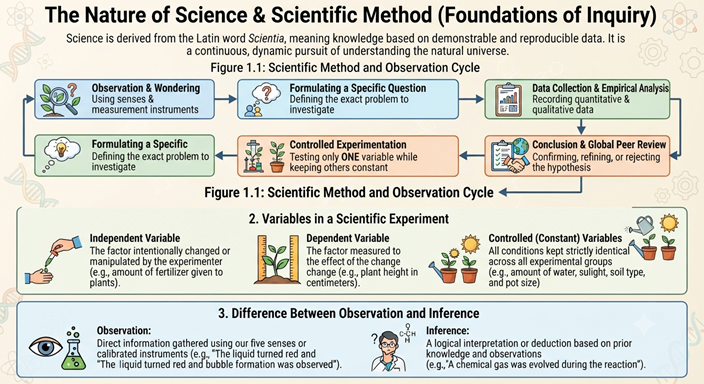
Figure 1.1: Scientific Method and Observation Cycle

Science is derived from the Latin word Scientia, meaning knowledge based on demonstrable and reproducible data. It is a continuous, dynamic pursuit of understanding the natural universe.

1. The Core Scientific Method

Scientists investigate questions through a systematic, reproducible multi-step procedure:

โ”Œโ”€โ”€โ”€โ”€โ”€โ”€โ”€โ”€โ”€โ”€โ”€โ”€โ”€โ”€โ”€โ”€โ”€โ”€โ”€โ”€โ”€โ”€โ”€โ”€โ”€โ”€โ”€โ”€โ”€โ”€โ”€โ”€โ”€โ”€โ”€โ”€โ”€โ”€โ”€โ”€โ”€โ”€โ”€โ”€โ”€โ”€โ”€โ”€โ”€โ”€โ”€โ”€โ”€โ”€โ”€โ”€โ”
โ”‚             THE SCIENTIFIC INQUIRY CYCLE               โ”‚
โ””โ”€โ”€โ”€โ”€โ”€โ”€โ”€โ”€โ”€โ”€โ”€โ”€โ”€โ”€โ”€โ”€โ”€โ”€โ”€โ”€โ”€โ”€โ”€โ”€โ”€โ”€โ”ฌโ”€โ”€โ”€โ”€โ”€โ”€โ”€โ”€โ”€โ”€โ”€โ”€โ”€โ”€โ”€โ”€โ”€โ”€โ”€โ”€โ”€โ”€โ”€โ”€โ”€โ”€โ”€โ”€โ”€โ”˜
                           โ”‚
                           โ–ผ
          1. Observation & Wondering
             (Using senses & measurement instruments)
                           โ”‚
                           โ–ผ
          2. Formulating a Specific Question
             (Defining the exact problem to investigate)
                           โ”‚
                           โ–ผ
          3. Constructing a Testable Hypothesis
             (An educated, testable prediction: If... then...)
                           โ”‚
                           โ–ผ
          4. Controlled Experimentation
             (Testing only ONE variable while keeping others constant)
                           โ”‚
                           โ–ผ
          5. Data Collection & Empirical Analysis
             (Recording quantitative & qualitative data)
                           โ”‚
                           โ–ผ
          6. Conclusion & Global Peer Review
             (Confirming, refining, or rejecting the hypothesis)

2. Variables in a Scientific Experiment

To ensure an experiment is fair and valid, scientists strictly control variables:

  • Independent Variable: The factor intentionally changed or manipulated by the experimenter (e.g., amount of fertilizer given to plants).
  • Dependent Variable: The factor measured to observe the effect of the change (e.g., plant height in centimeters).
  • Controlled (Constant) Variables: All conditions kept strictly identical across all experimental groups (e.g., amount of water, sunlight, soil type, and pot size).

3. Difference Between Observation and Inference

  • Observation: Direct information gathered using our five senses or calibrated instruments (e.g., "The liquid turned red and bubble formation was observed").
  • Inference: A logical interpretation or deduction based on prior knowledge and observations (e.g., "A chemical gas was evolved during the reaction").
๐Ÿ“
Comprehensive High-Yield Mathematical Relations & Theorems

Complete step-by-step derivations, step traps, and LaTeX formula sheet breakdowns...

๐Ÿ”’

End of Free Notes Preview

Unlock the complete deck to access full LaTeX formula breakdowns, interactive diagrams, exam traps, and personal margin highlights!

๐Ÿ”‘ Sign In / Register Free
๐Ÿง  Review Due (Interval: 1 Day) Card 1 of 8 (SM-2 Active Recall)
QUESTION (FRONT) Space โ†ต to flip
What is the fundamental definition of science?
ANSWER & EXPLANATION (BACK) Space โ†ต to flip
Science is a systematic and dynamic pursuit of knowledge about the natural world based on empirical observation, testable hypotheses, and reproducible experimentation.
๐Ÿ’ก
Tap Card to Flip & Check Your Answer Active recall prompt: Flip the card or press Space โ†ต to unlock the SM-2 recall difficulty rating.
๐Ÿ”’
Step 4 is Locked

Final Comprehensive Diagnostic Assessment (15 MCQs)

This ๐Ÿ“ LaTeX Concept Notes is part of the full verified curriculum for Chapter 1: The Ever-Evolving World of Science. Unlock the full deck to gain permanent access to all 11 interactive stages, active recall cards, and diagnostic checkpoints.

Deck Access Price
100% Free with Account
Instant Access
โœ“ UPI & Cards Supported
๐Ÿ”‘ Sign In / Register to Unlock Free →
๐Ÿ”’
Step 5 is Locked

Final Comprehensive Diagnostic Assessment (15 MCQs)

This โšก Diagnostic Quiz is part of the full verified curriculum for Chapter 1: The Ever-Evolving World of Science. Unlock the full deck to gain permanent access to all 11 interactive stages, active recall cards, and diagnostic checkpoints.

Deck Access Price
100% Free with Account
Instant Access
โœ“ UPI & Cards Supported
๐Ÿ”‘ Sign In / Register to Unlock Free →
๐Ÿ”’
Step 6 is Locked

Final Comprehensive Diagnostic Assessment (15 MCQs)

This Microlearning Step is part of the full verified curriculum for Chapter 1: The Ever-Evolving World of Science. Unlock the full deck to gain permanent access to all 11 interactive stages, active recall cards, and diagnostic checkpoints.

Deck Access Price
100% Free with Account
Instant Access
โœ“ UPI & Cards Supported
๐Ÿ”‘ Sign In / Register to Unlock Free →
๐Ÿ”’
Step 7 is Locked

Final Comprehensive Diagnostic Assessment (15 MCQs)

This ๐ŸŽฅ Video Lesson is part of the full verified curriculum for Chapter 1: The Ever-Evolving World of Science. Unlock the full deck to gain permanent access to all 11 interactive stages, active recall cards, and diagnostic checkpoints.

Deck Access Price
100% Free with Account
Instant Access
โœ“ UPI & Cards Supported
๐Ÿ”‘ Sign In / Register to Unlock Free →
๐Ÿ”’
Step 8 is Locked

Final Comprehensive Diagnostic Assessment (15 MCQs)

This ๐Ÿ“ LaTeX Concept Notes is part of the full verified curriculum for Chapter 1: The Ever-Evolving World of Science. Unlock the full deck to gain permanent access to all 11 interactive stages, active recall cards, and diagnostic checkpoints.

Deck Access Price
100% Free with Account
Instant Access
โœ“ UPI & Cards Supported
๐Ÿ”‘ Sign In / Register to Unlock Free →
๐Ÿ”’
Step 9 is Locked

Final Comprehensive Diagnostic Assessment (15 MCQs)

This ๐Ÿง  Active Recall Flashcards is part of the full verified curriculum for Chapter 1: The Ever-Evolving World of Science. Unlock the full deck to gain permanent access to all 11 interactive stages, active recall cards, and diagnostic checkpoints.

Deck Access Price
100% Free with Account
Instant Access
โœ“ UPI & Cards Supported
๐Ÿ”‘ Sign In / Register to Unlock Free →
๐Ÿ”’
Step 10 is Locked

Final Comprehensive Diagnostic Assessment (15 MCQs)

This ๐Ÿ“ LaTeX Concept Notes is part of the full verified curriculum for Chapter 1: The Ever-Evolving World of Science. Unlock the full deck to gain permanent access to all 11 interactive stages, active recall cards, and diagnostic checkpoints.

Deck Access Price
100% Free with Account
Instant Access
โœ“ UPI & Cards Supported
๐Ÿ”‘ Sign In / Register to Unlock Free →
๐Ÿ”’
Step 11 is Locked

Final Comprehensive Diagnostic Assessment (15 MCQs)

This โšก Diagnostic Quiz is part of the full verified curriculum for Chapter 1: The Ever-Evolving World of Science. Unlock the full deck to gain permanent access to all 11 interactive stages, active recall cards, and diagnostic checkpoints.

Deck Access Price
100% Free with Account
Instant Access
โœ“ UPI & Cards Supported
๐Ÿ”‘ Sign In / Register to Unlock Free →