Chapter 2: Exploring Substances: Acidic, Basic, and Neutral
๐Ÿ‡ฎ๐Ÿ‡ณ National Curriculum Standard โ–พ
๐Ÿ› Vidyoric Certified โ€ข Dr. Ananya Sharma
๐Ÿ”ฅ 0 days
โšก 0 Sparks +
Chapter 2: Exploring Substances: Acidic, Basic, and Neutral

Video Lecture 1: The Chemical Kitchen โ€” Sour Acids, Soapy Bases, and Magical Indicators

STEP 1: VIDEO LESSON ๐Ÿ“ค Uploaded HTML5 Video

๐Ÿ“‘ Interactive Chapter Bookmarks

5 chapters
00:00
Introduction & Overview

Syllabus scope and core objectives

โ–ถ
00:46
The Greate Litimus Test

Detailed physical mechanism and derivations

โ–ถ
02:19
Decoding The Data

High-yield board tips and pitfalls

โ–ถ
03:22
Nature's Indicators
โ–ถ
04:41
Real word Science
โ–ถ

๐ŸŽ™๏ธ Synchronized Transcript

๐Ÿ”
Hello, curious minds!

Have you ever wondered why lemonade tastes refreshing and sour, while accidentally tasting soap feels unpleasantly bitter and soapy?

In our everyday life, our taste buds give us subtle clues about chemistry!

The sour taste of citrus fruits comes from substances called **acids**. The word acid comes from the Latin word *acere*, which means sour. On the other hand, substances that taste bitter and feel slippery between our fingertips are called **bases**.

But remember an important safety rule: Never taste or touch unknown chemicals in a laboratory!

So, how can chemists safely identify whether a liquid is acidic or basic without tasting it? The answer lies in special substances called **indicators**. These substances change colour when they come in contact with acids or bases.

Let us explore one of the most common indicators: litmus.

Litmus is a natural dye extracted from lichens. It is available as red and blue paper strips.

First, let us take a blue litmus paper strip and dip it into lemon juice. Look carefully! The blue strip turns red. This shows that **acids turn blue litmus red**.

Now, let us take a red litmus paper strip and dip it into a baking soda solution. What happens? The red strip turns blue. This shows that **bases turn red litmus blue**.

But what happens when we test pure water or sugar syrup? Neither red nor blue litmus paper changes its colour. Such substances are called **neutral substances**.

We can also find other interesting natural indicators in our kitchen.

One example is turmeric. Turmeric paste remains yellow in acidic solutions. However, when it comes in contact with a basic substance, such as soap, it turns reddish-brown.

Have you ever noticed turmeric stains on a white shirt becoming reddish when washed with soap? This happens because soap is basic in nature.

Another natural indicator is China rose, also known as hibiscus. Its extract changes colour depending on the substance being tested. In acidic solutions, it turns dark pink or magenta. In basic solutions, it changes to green.

Isn't it fascinating how substances found in nature can help us identify acids and bases?

Now, let us explore what happens when an acid and a base are mixed together.

Do they continue to show their individual properties, or does something interesting happen?

When an acid and a base react in suitable proportions, they neutralize each other. This reaction is called **neutralization**.

During neutralization, an acid reacts with a base to produce salt and water. Heat may also be released during the reaction.

For example, hydrochloric acid reacts with sodium hydroxide to form sodium chloride, commonly known as common salt, and water.

So, remember these important points: acids turn blue litmus red, bases turn red litmus blue, and neutral substances do not change the colour of either litmus paper.

Indicators help us identify substances safely without tasting them.

Now, let us explore neutralization in more detail and understand how this reaction is useful in our everyday lives!
STEP 2 โ€ข CONCEPT NOTES โฑ๏ธ 3 min read
๐Ÿ“Œ 0 Notes

Acids, Bases & Natural Indicators (Classification of Substances)
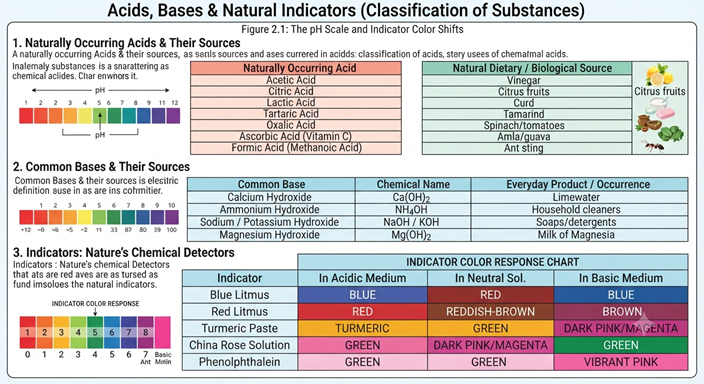
Figure 2.1: The pH Scale and Indicator Color Shifts

All chemical substances around us can be broadly classified based on their chemical behavior as acidic, basic, or neutral.

1. Naturally Occurring Acids & Their Sources

The word 'acid' originates from the Latin acere (meaning sour). Acids turn blue litmus red.

Naturally Occurring AcidNatural Dietary / Biological Source
Acetic AcidVinegar (used in cooking & food preservation)
Citric AcidCitrus fruits (lemons, oranges, sweet limes)
Lactic AcidCurd, sour milk, yogurt
Tartaric AcidTamarind, unripe grapes, raw mangoes
Oxalic AcidSpinach, tomatoes
Ascorbic Acid (Vitamin C)Amla (Indian gooseberry), guava, citrus fruits
Formic Acid (Methanoic Acid)Ant sting, bee sting, nettle leaf hair

2. Common Bases & Their Sources

Bases taste bitter and feel soapy or slippery when rubbed between fingers. Bases turn red litmus blue.

Common BaseChemical NameEveryday Product / Occurrence
Calcium Hydroxide$Ca(OH)_2$Limewater (Chuna water)
Ammonium Hydroxide$NH_4OH$Household window & glass cleaners
Sodium / Potassium Hydroxide$NaOH$ / $KOH$Bathing soaps & washing detergents
Magnesium Hydroxide$Mg(OH)_2$Milk of Magnesia (antacid suspension)

3. Indicators: Nature's Chemical Detectors

An indicator is a special substance that exhibits distinctly different colors in acidic, basic, and neutral media:

โ”Œโ”€โ”€โ”€โ”€โ”€โ”€โ”€โ”€โ”€โ”€โ”€โ”€โ”€โ”€โ”€โ”€โ”€โ”€โ”€โ”€โ”€โ”€โ”€โ”€โ”€โ”€โ”€โ”€โ”€โ”€โ”€โ”€โ”€โ”€โ”€โ”€โ”€โ”€โ”€โ”€โ”€โ”€โ”€โ”€โ”€โ”€โ”€โ”€โ”€โ”€โ”€โ”€โ”€โ”€โ”€โ”€โ”€โ”€โ”€โ”€โ”€โ”€โ”€โ”€โ”€โ”€โ”€โ”€โ”€โ”€โ”€โ”€โ”
โ”‚                      INDICATOR COLOR RESPONSE CHART                    โ”‚
โ”œโ”€โ”€โ”€โ”€โ”€โ”€โ”€โ”€โ”€โ”€โ”€โ”€โ”€โ”€โ”€โ”€โ”€โ”€โ”ฌโ”€โ”€โ”€โ”€โ”€โ”€โ”€โ”€โ”€โ”€โ”€โ”€โ”€โ”€โ”€โ”€โ”€โ”ฌโ”€โ”€โ”€โ”€โ”€โ”€โ”€โ”€โ”€โ”€โ”€โ”€โ”€โ”€โ”€โ”€โ”€โ”ฌโ”€โ”€โ”€โ”€โ”€โ”€โ”€โ”€โ”€โ”€โ”€โ”€โ”€โ”€โ”€โ”€โ”€โ”ค
โ”‚ Indicator        โ”‚ In Acidic Mediumโ”‚ In Neutral Sol. โ”‚ In Basic Medium โ”‚
โ”œโ”€โ”€โ”€โ”€โ”€โ”€โ”€โ”€โ”€โ”€โ”€โ”€โ”€โ”€โ”€โ”€โ”€โ”€โ”ผโ”€โ”€โ”€โ”€โ”€โ”€โ”€โ”€โ”€โ”€โ”€โ”€โ”€โ”€โ”€โ”€โ”€โ”ผโ”€โ”€โ”€โ”€โ”€โ”€โ”€โ”€โ”€โ”€โ”€โ”€โ”€โ”€โ”€โ”€โ”€โ”ผโ”€โ”€โ”€โ”€โ”€โ”€โ”€โ”€โ”€โ”€โ”€โ”€โ”€โ”€โ”€โ”€โ”€โ”ค
โ”‚ Blue Litmus      โ”‚ RED             โ”‚ Blue (No change)โ”‚ Blue (No change)โ”‚
โ”‚ Red Litmus       โ”‚ Red (No change) โ”‚ Red (No change) โ”‚ BLUE            โ”‚
โ”‚ Turmeric Paste   โ”‚ Yellow          โ”‚ Yellow          โ”‚ REDDISH-BROWN   โ”‚
โ”‚ China Rose Sol.  โ”‚ DARK PINK /     โ”‚ Light Pink      โ”‚ GREEN           โ”‚
โ”‚                  โ”‚ MAGENTA         โ”‚                 โ”‚                 โ”‚
โ”‚ Phenolphthalein  โ”‚ COLORLESS       โ”‚ Colorless       โ”‚ VIBRANT PINK    โ”‚
โ””โ”€โ”€โ”€โ”€โ”€โ”€โ”€โ”€โ”€โ”€โ”€โ”€โ”€โ”€โ”€โ”€โ”€โ”€โ”ดโ”€โ”€โ”€โ”€โ”€โ”€โ”€โ”€โ”€โ”€โ”€โ”€โ”€โ”€โ”€โ”€โ”€โ”ดโ”€โ”€โ”€โ”€โ”€โ”€โ”€โ”€โ”€โ”€โ”€โ”€โ”€โ”€โ”€โ”€โ”€โ”ดโ”€โ”€โ”€โ”€โ”€โ”€โ”€โ”€โ”€โ”€โ”€โ”€โ”€โ”€โ”€โ”€โ”€โ”˜
๐Ÿ“
Comprehensive High-Yield Mathematical Relations & Theorems

Complete step-by-step derivations, step traps, and LaTeX formula sheet breakdowns...

๐Ÿ”’

End of Free Notes Preview

Unlock the complete deck to access full LaTeX formula breakdowns, interactive diagrams, exam traps, and personal margin highlights!

๐Ÿ”‘ Sign In / Register Free
๐Ÿง  Review Due (Interval: 1 Day) Card 1 of 8 (SM-2 Active Recall)
QUESTION (FRONT) Space โ†ต to flip
What is the characteristic taste and chemical effect of acids on blue litmus paper?
ANSWER & EXPLANATION (BACK) Space โ†ต to flip
Acids have a sour taste and turn blue litmus paper red.
๐Ÿ’ก
Tap Card to Flip & Check Your Answer Active recall prompt: Flip the card or press Space โ†ต to unlock the SM-2 recall difficulty rating.
๐Ÿ”’
Step 4 is Locked

Final Comprehensive Diagnostic Assessment (15 MCQs)

This ๐Ÿ“ LaTeX Concept Notes is part of the full verified curriculum for Chapter 2: Exploring Substances: Acidic, Basic, and Neutral. Unlock the full deck to gain permanent access to all 11 interactive stages, active recall cards, and diagnostic checkpoints.

Deck Access Price
100% Free with Account
Instant Access
โœ“ UPI & Cards Supported
๐Ÿ”‘ Sign In / Register to Unlock Free →
๐Ÿ”’
Step 5 is Locked

Final Comprehensive Diagnostic Assessment (15 MCQs)

This โšก Diagnostic Quiz is part of the full verified curriculum for Chapter 2: Exploring Substances: Acidic, Basic, and Neutral. Unlock the full deck to gain permanent access to all 11 interactive stages, active recall cards, and diagnostic checkpoints.

Deck Access Price
100% Free with Account
Instant Access
โœ“ UPI & Cards Supported
๐Ÿ”‘ Sign In / Register to Unlock Free →
๐Ÿ”’
Step 6 is Locked

Final Comprehensive Diagnostic Assessment (15 MCQs)

This Microlearning Step is part of the full verified curriculum for Chapter 2: Exploring Substances: Acidic, Basic, and Neutral. Unlock the full deck to gain permanent access to all 11 interactive stages, active recall cards, and diagnostic checkpoints.

Deck Access Price
100% Free with Account
Instant Access
โœ“ UPI & Cards Supported
๐Ÿ”‘ Sign In / Register to Unlock Free →
๐Ÿ”’
Step 7 is Locked

Final Comprehensive Diagnostic Assessment (15 MCQs)

This ๐ŸŽฅ Video Lesson is part of the full verified curriculum for Chapter 2: Exploring Substances: Acidic, Basic, and Neutral. Unlock the full deck to gain permanent access to all 11 interactive stages, active recall cards, and diagnostic checkpoints.

Deck Access Price
100% Free with Account
Instant Access
โœ“ UPI & Cards Supported
๐Ÿ”‘ Sign In / Register to Unlock Free →
๐Ÿ”’
Step 8 is Locked

Final Comprehensive Diagnostic Assessment (15 MCQs)

This ๐Ÿ“ LaTeX Concept Notes is part of the full verified curriculum for Chapter 2: Exploring Substances: Acidic, Basic, and Neutral. Unlock the full deck to gain permanent access to all 11 interactive stages, active recall cards, and diagnostic checkpoints.

Deck Access Price
100% Free with Account
Instant Access
โœ“ UPI & Cards Supported
๐Ÿ”‘ Sign In / Register to Unlock Free →
๐Ÿ”’
Step 9 is Locked

Final Comprehensive Diagnostic Assessment (15 MCQs)

This ๐Ÿง  Active Recall Flashcards is part of the full verified curriculum for Chapter 2: Exploring Substances: Acidic, Basic, and Neutral. Unlock the full deck to gain permanent access to all 11 interactive stages, active recall cards, and diagnostic checkpoints.

Deck Access Price
100% Free with Account
Instant Access
โœ“ UPI & Cards Supported
๐Ÿ”‘ Sign In / Register to Unlock Free →
๐Ÿ”’
Step 10 is Locked

Final Comprehensive Diagnostic Assessment (15 MCQs)

This ๐Ÿ“ LaTeX Concept Notes is part of the full verified curriculum for Chapter 2: Exploring Substances: Acidic, Basic, and Neutral. Unlock the full deck to gain permanent access to all 11 interactive stages, active recall cards, and diagnostic checkpoints.

Deck Access Price
100% Free with Account
Instant Access
โœ“ UPI & Cards Supported
๐Ÿ”‘ Sign In / Register to Unlock Free →
๐Ÿ”’
Step 11 is Locked

Final Comprehensive Diagnostic Assessment (15 MCQs)

This โšก Diagnostic Quiz is part of the full verified curriculum for Chapter 2: Exploring Substances: Acidic, Basic, and Neutral. Unlock the full deck to gain permanent access to all 11 interactive stages, active recall cards, and diagnostic checkpoints.

Deck Access Price
100% Free with Account
Instant Access
โœ“ UPI & Cards Supported
๐Ÿ”‘ Sign In / Register to Unlock Free →