Part 1 โ€ข Chapter 4: New Beginnings: Cities and States
๐Ÿ‡ฎ๐Ÿ‡ณ National Curriculum Standard โ–พ
๐Ÿ› Vidyoric Certified โ€ข Dr. Meenakshi Sundaram
๐Ÿ”ฅ 0 days
โšก 0 Sparks +
Part 1 โ€ข Chapter 4: New Beginnings: Cities and States

Video Lecture 1: Fortified Capitals & Sovereign Realms โ€” The Dawn of Mahajanapadas

STEP 1: VIDEO LESSON ๐Ÿ“ค Uploaded HTML5 Video

๐Ÿ“‘ Interactive Chapter Bookmarks

6 chapters
00:00
Introduction & Overview

Syllabus scope and core objectives

โ–ถ
01:18
Second Urbanisation

Detailed physical mechanism and derivations

โ–ถ
02:48
The Mahajanapadas

High-yield board tips and pitfalls

โ–ถ
04:06
Early Democracies
โ–ถ
05:01
Iron And Coin Boom
โ–ถ
05:58
Varna-Jati System
โ–ถ

๐ŸŽ™๏ธ Synchronized Transcript

๐Ÿ”
Around 2,600 years ago, during the sixth century BCE, major political and social changes took place in northern India.

Earlier, many communities lived in tribes or clans known as *Janas*. With the spread of agriculture and the use of iron tools, people began clearing forests, cultivating land, and settling permanently.

The land where a Jana settled came to be known as a **Janapada**. Over time, several smaller Janapadas developed into larger territorial states called **Mahajanapadas**. Ancient texts mention sixteen major Mahajanapadas.

As these states grew, rulers built fortified cities with strong walls, watchtowers, and sometimes moats. These fortifications protected cities from enemy attacks and demonstrated the power and wealth of their rulers. They also helped rulers control important trade routes and entry points.

Maintaining armies and constructing fortifications required large amounts of money and resources. Therefore, kings developed regular systems of taxation.

Farmers generally paid a share of their agricultural produce, known as *Bhaga*. This was often one-sixth of the harvest. Craftspersons sometimes provided labour as tax. Herders contributed animals or dairy products, while traders paid duties on goods entering cities.

However, not all Mahajanapadas were ruled by hereditary kings.

Some, such as Magadha, Kosala, and Vatsa, were monarchies ruled by kings. Others, including Vajji and Malla, followed a different system known as *Gana* or *Sangha*.

In these states, groups of important leaders, often called rajas, met in an assembly hall known as a *Santhagara*. They discussed important matters and made decisions collectively. However, these were not modern democracies because political participation was generally limited to a small group of powerful members.

The Buddha and Mahavira were also associated with republican clans.

To summarise, the rise of agriculture, iron technology, permanent settlements, taxation, and fortified cities contributed to the development of the Mahajanapadas. These early states played an important role in shaping the political history of ancient India.

In the next step, we will explore the geographical distribution of the sixteen Mahajanapadas and understand why Magadha eventually became the most powerful among them.
STEP 2 โ€ข CONCEPT NOTES โฑ๏ธ 3 min read
๐Ÿ“Œ 0 Notes

Concept Notes 1: The Emergence of Janapadas and Mahajanapadas
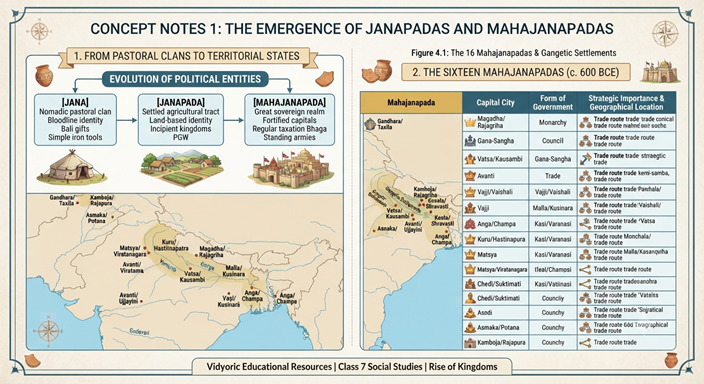
Figure 4.1: The 16 Mahajanapadas & Gangetic Settlements

1. From Pastoral Clans to Territorial States

Around 1000 BCE to 600 BCE, nomadic pastoral tribes (Janas) settled permanently into agricultural territories. The region where a clan set its foot (pada) and took root became known as a Janapada.

                       EVOLUTION OF POLITICAL ENTITIES
                                      โ”‚
       โ”Œโ”€โ”€โ”€โ”€โ”€โ”€โ”€โ”€โ”€โ”€โ”€โ”€โ”€โ”€โ”€โ”€โ”€โ”€โ”€โ”€โ”€โ”€โ”€โ”€โ”€โ”€โ”€โ”€โ”€โ”€โ”ผโ”€โ”€โ”€โ”€โ”€โ”€โ”€โ”€โ”€โ”€โ”€โ”€โ”€โ”€โ”€โ”€โ”€โ”€โ”€โ”€โ”€โ”€โ”€โ”€โ”€โ”€โ”€โ”€โ”€โ”€โ”
       โ–ผ                              โ–ผ                              โ–ผ
    [ JANA ]                    [ JANAPADA ]                 [ MAHAJANAPADA ]
โ€ข Nomadic pastoral clan       โ€ข Settled agricultural tract   โ€ข Great sovereign realm (16 total)
โ€ข Identity tied to bloodline  โ€ข Land-based identity          โ€ข Fortified capital cities
โ€ข Voluntary gifts (Bali)      โ€ข Incipient kingdoms/chiefdoms โ€ข Regular taxation (Bhaga)
โ€ข Simple iron tools           โ€ข Painted Grey Ware (PGW)      โ€ข Standing professional armies

2. The Sixteen Mahajanapadas (c. 600 BCE)

Ancient Buddhist texts (Anguttara Nikaya) and Jaina texts (Bhagavati Sutra) enumerate sixteen prominent realms:

MahajanapadaCapital CityForm of GovernmentStrategic Importance & Geographical Location
MagadhaRajagriha / PataliputraMonarchyIron mines, river transport, fertile alluvium (South Bihar)
KosalaShravasti / AyodhyaMonarchyFlourishing trade along Rapti river; kingdom of King Prasenajit
VatsaKausambiMonarchyConfluence of Ganga and Yamuna; ruled by King Udayana
AvantiUjjayini / MahishmatiMonarchyIron smelting center; junction of northern and southern trade routes
VajjiVaishaliGana-Sangha (Republic)Powerful confederacy of eight clans including Lichchhavis
MallaKusinara / PavaGana-Sangha (Republic)Site of Mahaparinirvana of Buddha and death of Mahavira
KasiVaranasiMonarchyFamous for fine cotton textiles, ivory crafts, and religious sanctity
AngaChampaMonarchyCoastal trading gateway along the lower Ganga, eastern neighbor of Magadha
KuruHastinapura / IndraprasthaMonarchyTraditional epic territory between Yamuna and upper Ganga
PanchalaAhichchhatra / KampilyaMonarchyUpper Gangetic doab; renowned for Vedic scholarship
MatsyaViratanagaraMonarchyWestern semi-arid region around Jaipur and Alwar in Rajasthan
SurasenaMathuraMonarchyStrategic crossing on the Yamuna; ruled by the Yadava clan
ChediSuktimatiMonarchySituated along the Ken river valley in Bundelkhand
Asmaka (Assaka)Potana / PaudanyaMonarchyOnly southern Mahajanapada; located on the Godavari river
GandharaTaxilaMonarchyNorthwestern hub of trans-Asian trade and higher university education
KambojaRajapuraMonarchy / RepublicFamous for superior breeds of Central Asian cavalry horses
๐Ÿ“
Comprehensive High-Yield Mathematical Relations & Theorems

Complete step-by-step derivations, step traps, and LaTeX formula sheet breakdowns...

๐Ÿ”’

End of Free Notes Preview

Unlock the complete deck to access full LaTeX formula breakdowns, interactive diagrams, exam traps, and personal margin highlights!

๐Ÿ”‘ Sign In / Register Free
๐Ÿง  Review Due (Interval: 1 Day) Card 1 of 8 (SM-2 Active Recall)
QUESTION (FRONT) Space โ†ต to flip
What is the literal meaning of the word "Janapada"?
ANSWER & EXPLANATION (BACK) Space โ†ต to flip
The land where a Jana (tribe or clan) sets its foot and settles down permanently.
๐Ÿ’ก
Tap Card to Flip & Check Your Answer Active recall prompt: Flip the card or press Space โ†ต to unlock the SM-2 recall difficulty rating.
๐Ÿ”’
Step 4 is Locked

Final Comprehensive Diagnostic Assessment (15 MCQs)

This ๐Ÿ“ LaTeX Concept Notes is part of the full verified curriculum for Part 1 โ€ข Chapter 4: New Beginnings: Cities and States. Unlock the full deck to gain permanent access to all 11 interactive stages, active recall cards, and diagnostic checkpoints.

Deck Access Price
100% Free with Account
Instant Access
โœ“ UPI & Cards Supported
๐Ÿ”‘ Sign In / Register to Unlock Free →
๐Ÿ”’
Step 5 is Locked

Final Comprehensive Diagnostic Assessment (15 MCQs)

This โšก Diagnostic Quiz is part of the full verified curriculum for Part 1 โ€ข Chapter 4: New Beginnings: Cities and States. Unlock the full deck to gain permanent access to all 11 interactive stages, active recall cards, and diagnostic checkpoints.

Deck Access Price
100% Free with Account
Instant Access
โœ“ UPI & Cards Supported
๐Ÿ”‘ Sign In / Register to Unlock Free →
๐Ÿ”’
Step 6 is Locked

Final Comprehensive Diagnostic Assessment (15 MCQs)

This Microlearning Step is part of the full verified curriculum for Part 1 โ€ข Chapter 4: New Beginnings: Cities and States. Unlock the full deck to gain permanent access to all 11 interactive stages, active recall cards, and diagnostic checkpoints.

Deck Access Price
100% Free with Account
Instant Access
โœ“ UPI & Cards Supported
๐Ÿ”‘ Sign In / Register to Unlock Free →
๐Ÿ”’
Step 7 is Locked

Final Comprehensive Diagnostic Assessment (15 MCQs)

This ๐ŸŽฅ Video Lesson is part of the full verified curriculum for Part 1 โ€ข Chapter 4: New Beginnings: Cities and States. Unlock the full deck to gain permanent access to all 11 interactive stages, active recall cards, and diagnostic checkpoints.

Deck Access Price
100% Free with Account
Instant Access
โœ“ UPI & Cards Supported
๐Ÿ”‘ Sign In / Register to Unlock Free →
๐Ÿ”’
Step 8 is Locked

Final Comprehensive Diagnostic Assessment (15 MCQs)

This ๐Ÿ“ LaTeX Concept Notes is part of the full verified curriculum for Part 1 โ€ข Chapter 4: New Beginnings: Cities and States. Unlock the full deck to gain permanent access to all 11 interactive stages, active recall cards, and diagnostic checkpoints.

Deck Access Price
100% Free with Account
Instant Access
โœ“ UPI & Cards Supported
๐Ÿ”‘ Sign In / Register to Unlock Free →
๐Ÿ”’
Step 9 is Locked

Final Comprehensive Diagnostic Assessment (15 MCQs)

This ๐Ÿง  Active Recall Flashcards is part of the full verified curriculum for Part 1 โ€ข Chapter 4: New Beginnings: Cities and States. Unlock the full deck to gain permanent access to all 11 interactive stages, active recall cards, and diagnostic checkpoints.

Deck Access Price
100% Free with Account
Instant Access
โœ“ UPI & Cards Supported
๐Ÿ”‘ Sign In / Register to Unlock Free →
๐Ÿ”’
Step 10 is Locked

Final Comprehensive Diagnostic Assessment (15 MCQs)

This ๐Ÿ“ LaTeX Concept Notes is part of the full verified curriculum for Part 1 โ€ข Chapter 4: New Beginnings: Cities and States. Unlock the full deck to gain permanent access to all 11 interactive stages, active recall cards, and diagnostic checkpoints.

Deck Access Price
100% Free with Account
Instant Access
โœ“ UPI & Cards Supported
๐Ÿ”‘ Sign In / Register to Unlock Free →
๐Ÿ”’
Step 11 is Locked

Final Comprehensive Diagnostic Assessment (15 MCQs)

This โšก Diagnostic Quiz is part of the full verified curriculum for Part 1 โ€ข Chapter 4: New Beginnings: Cities and States. Unlock the full deck to gain permanent access to all 11 interactive stages, active recall cards, and diagnostic checkpoints.

Deck Access Price
100% Free with Account
Instant Access
โœ“ UPI & Cards Supported
๐Ÿ”‘ Sign In / Register to Unlock Free →