Part 1 โ€ข Chapter 6: The Age of Reorganisation
๐Ÿ‡ฎ๐Ÿ‡ณ National Curriculum Standard โ–พ
๐Ÿ› Vidyoric Certified โ€ข Dr. Meenakshi Sundaram
๐Ÿ”ฅ 0 days
โšก 0 Sparks +
Part 1 โ€ข Chapter 6: The Age of Reorganisation

Video Lecture 1: A Vibrant Tapestry โ€” The Post-Mauryan Subcontinent

STEP 1: VIDEO LESSON ๐Ÿ“ค Uploaded HTML5 Video

๐Ÿ“‘ Interactive Chapter Bookmarks

4 chapters
00:00
Introduction & Overview

Syllabus scope and core objectives

โ–ถ
01:19
Fall Of Maurya Empire

Detailed physical mechanism and derivations

โ–ถ
01:45
Age OF Reorganisation

High-yield board tips and pitfalls

โ–ถ
04:44
THe Golden Era Culture
โ–ถ

๐ŸŽ™๏ธ Synchronized Transcript

๐Ÿ”
After the decline of the Mauryan Empire around 185 BCE, the Indian subcontinent entered a period of major political and cultural change.

The fall of the Mauryas did not lead to a dark age. Instead, several regional kingdoms emerged and trade, art, architecture, and cultural exchange flourished. New political powers connected India with Central Asia, China, and the Roman world.

In northern India, the Shunga dynasty emerged under Pushyamitra Shunga, who overthrew the last Mauryan ruler, Brihadratha.

In the northwest, new powers such as the Indo-Greeks, Shakas, and Kushanas established their kingdoms.

The **Indo-Greeks** introduced important developments in coin-making. Their coins often carried realistic portraits of rulers and inscriptions in different languages. One famous Indo-Greek king was **Menander**, also known as Milinda. His discussions with the Buddhist monk Nagasena are recorded in the text *Milinda Panha*, meaning Questions of King Milinda.

The **Shakas**, also known as Scythians, came from Central Asia. One of their most famous rulers was **Rudradaman I**. He repaired the Sudarshana Lake reservoir in Gujarat. His Junagadh inscription is especially important because it is one of the earliest long inscriptions written in classical Sanskrit.

Another powerful dynasty was the **Kushana Empire**. Under rulers such as **Kanishka**, the Kushanas controlled important territories across Central Asia and northwestern India.

Their location helped them benefit from the Silk Road, a network of trade routes connecting China, Central Asia, and the Mediterranean region. Traders exchanged Chinese silk, horses, precious stones, glassware, and many other goods. These connections also encouraged the spread of religious and cultural ideas.

Kanishka is closely associated with the growth of Buddhism. Traditional accounts connect him with a Buddhist council held in Kashmir, although historians continue to discuss its details and historical significance.

Meanwhile, the Deccan region saw the rise of the **Satavahanas**, while southern India was home to the powerful Chera, Chola, and Pandya kingdoms, which supported trade and maritime activities.

The post-Mauryan period was therefore an age of regional powers, expanding trade networks, and cultural interaction. These developments shaped the political and artistic traditions of ancient India.

In the next step, we will explore the Gandhara and Mathura schools of art and understand how the Satavahanas governed the Deccan.
STEP 2 โ€ข CONCEPT NOTES โฑ๏ธ 3 min read
๐Ÿ“Œ 0 Notes

Concept Notes 1: Northern Dynasties โ€” Shungas, Indo-Greeks, Shakas & Kushanas
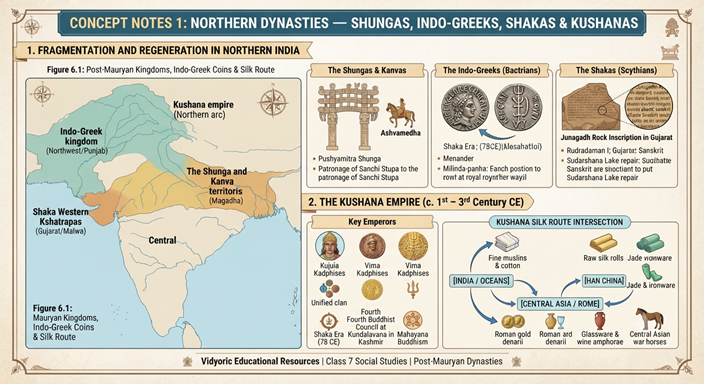
Figure 6.1: Post-Mauryan Kingdoms, Indo-Greek Coins & Silk Route

1. Fragmentation and Regeneration in Northern India

Following the assassination of the last Mauryan ruler Brihadratha around 185 BCE by his commander-in-chief Pushyamitra Shunga, northern India witnessed the emergence of vibrant regional powers:

  • The Shungas & Kanvas: Pushyamitra established the Shunga dynasty, revived Vedic horse sacrifices (Ashvamedha), and patronized magnificent Buddhist stone gateways (Toranas) and railings at the Bharhut Stupa and Sanchi Stupa.
  • The Indo-Greeks (Bactrians): Descendants of Alexander's Hellenistic generals ruled Afghanistan and Punjab:
  • First to issue bilingual coins with portraits of rulers and titles in Greek and Kharosthi.
  • Most famous king was Menander (Milinda), who converted to Buddhism after dialogues with the monk Nagasena recorded in the text Milinda-panha.
  • The Shakas (Scythians): Central Asian pastoralists who established five branches of rule:
  • Rudradaman I (c. 130โ€“150 CE): The most renowned Western Kshatrapa ruler. Inscribed the famous Junagadh Rock Inscription in Gujaratโ€”the earliest major record in chaste classical Sanskritโ€”celebrating his private financing of the repair of the ancient Sudarshana Lake reservoir dam.

2. The Kushana Empire (c. 1st โ€“ 3rd Century CE)

Originating from the nomadic Yuezhi confederation of Central Asia, the Kushanas forged a vast trans-continental empire:

  • Key Emperors:
  • Kujula Kadphises: Unified the Yuezhi clans and struck copper coins imitating Roman coins.
  • Vima Kadphises: First Indian ruler to issue extensive, high-purity Gold Dinars; ardent devotee of Lord Shiva (Maheshvara).
  • Kanishka I (c. 78 CE): Inaugurated the Shaka Era (starting 78 CE, adopted as the National Calendar of India).
  • The Fourth Buddhist Council: Convened by Kanishka at Kundalavana in Kashmir, presided over by Vasumitra and Ashvaghosha (author of Buddhacharita). Marked the official doctrinal emergence of Mahayana Buddhism.
  • Control of the Silk Route: The Kushanas collected transit tolls on the northern overland Silk Route connecting Han China, Bactria, Parthia, and the Roman Empire.
                      KUSHANA SILK ROUTE INTERSECTION
                                     โ”‚
       โ”Œโ”€โ”€โ”€โ”€โ”€โ”€โ”€โ”€โ”€โ”€โ”€โ”€โ”€โ”€โ”€โ”€โ”€โ”€โ”€โ”€โ”€โ”€โ”€โ”€โ”€โ”€โ”€โ”€โ”€โ”ผโ”€โ”€โ”€โ”€โ”€โ”€โ”€โ”€โ”€โ”€โ”€โ”€โ”€โ”€โ”€โ”€โ”€โ”€โ”€โ”€โ”€โ”€โ”€โ”€โ”€โ”€โ”€โ”€โ”€โ”
       โ–ผ                             โ–ผ                             โ–ผ
  [ HAN CHINA ]            [ CENTRAL ASIA / ROME ]          [ INDIA / OCEANS ]
โ€ข Raw silk rolls           โ€ข Roman gold denarii           โ€ข Fine muslins & cotton
โ€ข Jade & ironware          โ€ข Glassware & wine amphorae    โ€ข Spices, pepper, ivory
โ€ข Carried across Pamirs    โ€ข Central Asian war horses     โ€ข Shipped via Barygaza
๐Ÿ“
Comprehensive High-Yield Mathematical Relations & Theorems

Complete step-by-step derivations, step traps, and LaTeX formula sheet breakdowns...

๐Ÿ”’

End of Free Notes Preview

Unlock the complete deck to access full LaTeX formula breakdowns, interactive diagrams, exam traps, and personal margin highlights!

๐Ÿ”‘ Sign In / Register Free
๐Ÿง  Review Due (Interval: 1 Day) Card 1 of 8 (SM-2 Active Recall)
QUESTION (FRONT) Space โ†ต to flip
Who was the founder of the Shunga dynasty, and whom did he overthrow in 185 BCE?
ANSWER & EXPLANATION (BACK) Space โ†ต to flip
Pushyamitra Shunga, who overthrew Brihadratha, the last Mauryan ruler.
๐Ÿ’ก
Tap Card to Flip & Check Your Answer Active recall prompt: Flip the card or press Space โ†ต to unlock the SM-2 recall difficulty rating.
๐Ÿ”’
Step 4 is Locked

Final Comprehensive Diagnostic Assessment (15 MCQs)

This ๐Ÿ“ LaTeX Concept Notes is part of the full verified curriculum for Part 1 โ€ข Chapter 6: The Age of Reorganisation. Unlock the full deck to gain permanent access to all 11 interactive stages, active recall cards, and diagnostic checkpoints.

Deck Access Price
100% Free with Account
Instant Access
โœ“ UPI & Cards Supported
๐Ÿ”‘ Sign In / Register to Unlock Free →
๐Ÿ”’
Step 5 is Locked

Final Comprehensive Diagnostic Assessment (15 MCQs)

This โšก Diagnostic Quiz is part of the full verified curriculum for Part 1 โ€ข Chapter 6: The Age of Reorganisation. Unlock the full deck to gain permanent access to all 11 interactive stages, active recall cards, and diagnostic checkpoints.

Deck Access Price
100% Free with Account
Instant Access
โœ“ UPI & Cards Supported
๐Ÿ”‘ Sign In / Register to Unlock Free →
๐Ÿ”’
Step 6 is Locked

Final Comprehensive Diagnostic Assessment (15 MCQs)

This Microlearning Step is part of the full verified curriculum for Part 1 โ€ข Chapter 6: The Age of Reorganisation. Unlock the full deck to gain permanent access to all 11 interactive stages, active recall cards, and diagnostic checkpoints.

Deck Access Price
100% Free with Account
Instant Access
โœ“ UPI & Cards Supported
๐Ÿ”‘ Sign In / Register to Unlock Free →
๐Ÿ”’
Step 7 is Locked

Final Comprehensive Diagnostic Assessment (15 MCQs)

This ๐ŸŽฅ Video Lesson is part of the full verified curriculum for Part 1 โ€ข Chapter 6: The Age of Reorganisation. Unlock the full deck to gain permanent access to all 11 interactive stages, active recall cards, and diagnostic checkpoints.

Deck Access Price
100% Free with Account
Instant Access
โœ“ UPI & Cards Supported
๐Ÿ”‘ Sign In / Register to Unlock Free →
๐Ÿ”’
Step 8 is Locked

Final Comprehensive Diagnostic Assessment (15 MCQs)

This ๐Ÿ“ LaTeX Concept Notes is part of the full verified curriculum for Part 1 โ€ข Chapter 6: The Age of Reorganisation. Unlock the full deck to gain permanent access to all 11 interactive stages, active recall cards, and diagnostic checkpoints.

Deck Access Price
100% Free with Account
Instant Access
โœ“ UPI & Cards Supported
๐Ÿ”‘ Sign In / Register to Unlock Free →
๐Ÿ”’
Step 9 is Locked

Final Comprehensive Diagnostic Assessment (15 MCQs)

This ๐Ÿง  Active Recall Flashcards is part of the full verified curriculum for Part 1 โ€ข Chapter 6: The Age of Reorganisation. Unlock the full deck to gain permanent access to all 11 interactive stages, active recall cards, and diagnostic checkpoints.

Deck Access Price
100% Free with Account
Instant Access
โœ“ UPI & Cards Supported
๐Ÿ”‘ Sign In / Register to Unlock Free →
๐Ÿ”’
Step 10 is Locked

Final Comprehensive Diagnostic Assessment (15 MCQs)

This ๐Ÿ“ LaTeX Concept Notes is part of the full verified curriculum for Part 1 โ€ข Chapter 6: The Age of Reorganisation. Unlock the full deck to gain permanent access to all 11 interactive stages, active recall cards, and diagnostic checkpoints.

Deck Access Price
100% Free with Account
Instant Access
โœ“ UPI & Cards Supported
๐Ÿ”‘ Sign In / Register to Unlock Free →
๐Ÿ”’
Step 11 is Locked

Final Comprehensive Diagnostic Assessment (15 MCQs)

This โšก Diagnostic Quiz is part of the full verified curriculum for Part 1 โ€ข Chapter 6: The Age of Reorganisation. Unlock the full deck to gain permanent access to all 11 interactive stages, active recall cards, and diagnostic checkpoints.

Deck Access Price
100% Free with Account
Instant Access
โœ“ UPI & Cards Supported
๐Ÿ”‘ Sign In / Register to Unlock Free →