Part 1 โ€ข Chapter 8: How the Land Becomes Sacred
๐Ÿ‡ฎ๐Ÿ‡ณ National Curriculum Standard โ–พ
๐Ÿ› Vidyoric Certified โ€ข Dr. Meenakshi Sundaram
๐Ÿ”ฅ 0 days
โšก 0 Sparks +
Part 1 โ€ข Chapter 8: How the Land Becomes Sacred

Video Lecture 1: The Geography of Reverence โ€” How India Views the Land

STEP 1: VIDEO LESSON ๐Ÿ“ค Uploaded HTML5 Video

๐Ÿ“‘ Interactive Chapter Bookmarks

5 chapters
00:00
Introduction & Overview

Syllabus scope and core objectives

โ–ถ
00:41
Defining The Sacred

Detailed physical mechanism and derivations

โ–ถ
03:00
Inner 7 Outer Journey

High-yield board tips and pitfalls

โ–ถ
05:00
Nature As The Divine
โ–ถ
07:28
Intehrating Cultures
โ–ถ

๐ŸŽ™๏ธ Synchronized Transcript

๐Ÿ”
In Indian traditions, the land is not viewed merely as soil, forests, rivers, and mountains. It is also respected as sacred and life-giving. The Earth is often worshipped as Bhumi Devi, or Mother Earth. Rivers are revered as mothers, mountains are associated with spiritual traditions, and forests are protected as sacred places.

This connection between physical geography and religious belief is known as **sacred geography**.

Two important concepts help us understand it: *Tirtha* and *Kshetra*.

The Sanskrit word *Tirtha* refers to a crossing point, such as a shallow place where people can safely cross a river. Over time, it also came to mean a sacred place where people visit for spiritual growth and reflection. A pilgrimage to such a place is called *Tirthayatra*.

A *Kshetra* refers to a sacred area or region associated with a deity, religious tradition, or spiritual significance.

Pilgrimage has played an important role in connecting different parts of India. People travel long distances to visit sacred rivers, temples, mountains, and other religious sites. These journeys bring together people from different regions, languages, and communities, encouraging cultural exchange and shared traditions.

Rivers hold a particularly important place in India's sacred geography. The Ganga, Yamuna, Godavari, Saraswati, Narmada, Sindhu, and Kaveri are among the rivers revered in Indian traditions.

A well-known Sanskrit invocation names these rivers:

"Gange cha Yamune chaiva, Godavari Saraswati, Narmade Sindhu Kaveri, jalesmin sannidhim kuru."

This prayer invites the sacred presence of these rivers into the water used for worship. It symbolically connects rivers from different parts of the subcontinent.

Sacred geography is not limited to rivers and pilgrimage centres. Many communities also protect forests known as **sacred groves**. These are areas where religious and cultural beliefs discourage activities such as cutting trees or hunting. Such traditions have helped conserve local plants, animals, and biodiversity.

To summarise, India's sacred geography connects nature, spirituality, and culture. Rivers, mountains, forests, and pilgrimage routes are not only physical features but also important parts of the country's shared cultural heritage.

In the next step, we will explore the sacred river confluences known as the Pancha Prayag and understand how sacred groves contribute to biodiversity conservation.
STEP 2 โ€ข CONCEPT NOTES โฑ๏ธ 3 min read
๐Ÿ“Œ 0 Notes

Concept Notes 1: The Philosophy of Sacred Geography & Tirthas
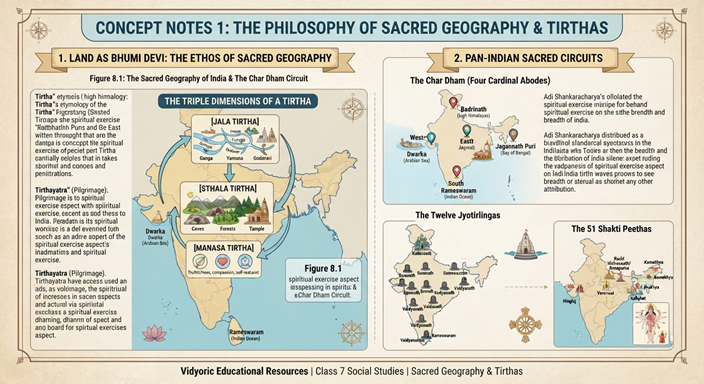
Figure 8.1: The Sacred Geography of India & The Char Dham Circuit

1. Land as Bhumi Devi: The Ethos of Sacred Geography

In the Indian civilizational tradition, geography is not viewed merely as physical space (desha), but as a sacred landscape imbued with moral, spiritual, and ecological meaning:

  • Etymology of Tirtha: Derived from the Sanskrit root Tr (to ford, cross over). A Tirtha is literally a crossing place across a river, and spiritually a threshold where human beings cross over the river of worldly suffering (Samsara) toward higher consciousness.
  • Tirthayatra (Pilgrimage): The act of journeying to sacred sites. Unlike tourism, pilgrimage is a deliberate spiritual exercise involving austerity, walking, reflection, and surrender of ego.
                  THE TRIPLE DIMENSIONS OF A TIRTHA
                                  โ”‚
       โ”Œโ”€โ”€โ”€โ”€โ”€โ”€โ”€โ”€โ”€โ”€โ”€โ”€โ”€โ”€โ”€โ”€โ”€โ”€โ”€โ”€โ”€โ”€โ”€โ”€โ”€โ”€โ”ผโ”€โ”€โ”€โ”€โ”€โ”€โ”€โ”€โ”€โ”€โ”€โ”€โ”€โ”€โ”€โ”€โ”€โ”€โ”€โ”€โ”€โ”€โ”€โ”€โ”€โ”€โ”
       โ–ผ                          โ–ผ                          โ–ผ
 [ JALA TIRTHA ]           [ STHALA TIRTHA ]          [ MANASA TIRTHA ]
โ€ข Fords & sacred rivers   โ€ข Sacred hills, caves,     โ€ข Inner pilgrimage of the
  (Ganga, Yamuna, Godavari) forests, and temples       mind: truthfulness, compassion,
โ€ข Confluences (Prayags)   โ€ข Sites of saints' tapasya   self-restraint, and purity

2. Pan-Indian Sacred Circuits

Pilgrimage networks geographically unified the Indian subcontinent long before modern nationhood:

  • The Char Dham (Four Cardinal Abodes): Established by the 8th-century philosopher Adi Shankaracharya:
  • North: Badrinath (Uttarakhand, high Himalayas).
  • East: Jagannath Puri (Odisha, Bay of Bengal).
  • South: Rameswaram (Tamil Nadu, Indian Ocean).
  • West: Dwarka (Gujarat, Arabian Sea).
  • The Twelve Jyotirlingas: Twelve sacred shrines of Lord Shiva distributed across the length and breadth of India (from Kedarnath in the north to Rameswaram in the south, and Somnath in the west to Vaidyanath in the east).
  • The 51 Shakti Peethas: Shrines dedicated to the Mother Goddess spanning from Hinglaj in the west to Kamakhya in Assam, mapping the physical body of the goddess directly onto the geography of the subcontinent.
๐Ÿ“
Comprehensive High-Yield Mathematical Relations & Theorems

Complete step-by-step derivations, step traps, and LaTeX formula sheet breakdowns...

๐Ÿ”’

End of Free Notes Preview

Unlock the complete deck to access full LaTeX formula breakdowns, interactive diagrams, exam traps, and personal margin highlights!

๐Ÿ”‘ Sign In / Register Free
๐Ÿง  Review Due (Interval: 1 Day) Card 1 of 8 (SM-2 Active Recall)
QUESTION (FRONT) Space โ†ต to flip
What is the literal meaning and root of the Sanskrit word "Tirtha"?
ANSWER & EXPLANATION (BACK) Space โ†ต to flip
Derived from the root "Tr" (to cross over), literally meaning a shallow river ford; spiritually, a threshold to cross from ignorance to wisdom.
๐Ÿ’ก
Tap Card to Flip & Check Your Answer Active recall prompt: Flip the card or press Space โ†ต to unlock the SM-2 recall difficulty rating.
๐Ÿ”’
Step 4 is Locked

Final Comprehensive Diagnostic Assessment (15 MCQs)

This ๐Ÿ“ LaTeX Concept Notes is part of the full verified curriculum for Part 1 โ€ข Chapter 8: How the Land Becomes Sacred. Unlock the full deck to gain permanent access to all 11 interactive stages, active recall cards, and diagnostic checkpoints.

Deck Access Price
100% Free with Account
Instant Access
โœ“ UPI & Cards Supported
๐Ÿ”‘ Sign In / Register to Unlock Free →
๐Ÿ”’
Step 5 is Locked

Final Comprehensive Diagnostic Assessment (15 MCQs)

This โšก Diagnostic Quiz is part of the full verified curriculum for Part 1 โ€ข Chapter 8: How the Land Becomes Sacred. Unlock the full deck to gain permanent access to all 11 interactive stages, active recall cards, and diagnostic checkpoints.

Deck Access Price
100% Free with Account
Instant Access
โœ“ UPI & Cards Supported
๐Ÿ”‘ Sign In / Register to Unlock Free →
๐Ÿ”’
Step 6 is Locked

Final Comprehensive Diagnostic Assessment (15 MCQs)

This Microlearning Step is part of the full verified curriculum for Part 1 โ€ข Chapter 8: How the Land Becomes Sacred. Unlock the full deck to gain permanent access to all 11 interactive stages, active recall cards, and diagnostic checkpoints.

Deck Access Price
100% Free with Account
Instant Access
โœ“ UPI & Cards Supported
๐Ÿ”‘ Sign In / Register to Unlock Free →
๐Ÿ”’
Step 7 is Locked

Final Comprehensive Diagnostic Assessment (15 MCQs)

This ๐ŸŽฅ Video Lesson is part of the full verified curriculum for Part 1 โ€ข Chapter 8: How the Land Becomes Sacred. Unlock the full deck to gain permanent access to all 11 interactive stages, active recall cards, and diagnostic checkpoints.

Deck Access Price
100% Free with Account
Instant Access
โœ“ UPI & Cards Supported
๐Ÿ”‘ Sign In / Register to Unlock Free →
๐Ÿ”’
Step 8 is Locked

Final Comprehensive Diagnostic Assessment (15 MCQs)

This ๐Ÿ“ LaTeX Concept Notes is part of the full verified curriculum for Part 1 โ€ข Chapter 8: How the Land Becomes Sacred. Unlock the full deck to gain permanent access to all 11 interactive stages, active recall cards, and diagnostic checkpoints.

Deck Access Price
100% Free with Account
Instant Access
โœ“ UPI & Cards Supported
๐Ÿ”‘ Sign In / Register to Unlock Free →
๐Ÿ”’
Step 9 is Locked

Final Comprehensive Diagnostic Assessment (15 MCQs)

This ๐Ÿง  Active Recall Flashcards is part of the full verified curriculum for Part 1 โ€ข Chapter 8: How the Land Becomes Sacred. Unlock the full deck to gain permanent access to all 11 interactive stages, active recall cards, and diagnostic checkpoints.

Deck Access Price
100% Free with Account
Instant Access
โœ“ UPI & Cards Supported
๐Ÿ”‘ Sign In / Register to Unlock Free →
๐Ÿ”’
Step 10 is Locked

Final Comprehensive Diagnostic Assessment (15 MCQs)

This ๐Ÿ“ LaTeX Concept Notes is part of the full verified curriculum for Part 1 โ€ข Chapter 8: How the Land Becomes Sacred. Unlock the full deck to gain permanent access to all 11 interactive stages, active recall cards, and diagnostic checkpoints.

Deck Access Price
100% Free with Account
Instant Access
โœ“ UPI & Cards Supported
๐Ÿ”‘ Sign In / Register to Unlock Free →
๐Ÿ”’
Step 11 is Locked

Final Comprehensive Diagnostic Assessment (15 MCQs)

This โšก Diagnostic Quiz is part of the full verified curriculum for Part 1 โ€ข Chapter 8: How the Land Becomes Sacred. Unlock the full deck to gain permanent access to all 11 interactive stages, active recall cards, and diagnostic checkpoints.

Deck Access Price
100% Free with Account
Instant Access
โœ“ UPI & Cards Supported
๐Ÿ”‘ Sign In / Register to Unlock Free →