Part 1 โ€ข Chapter 9: From the Rulers to the Ruled: Types of Governments
๐Ÿ‡ฎ๐Ÿ‡ณ National Curriculum Standard โ–พ
๐Ÿ› Vidyoric Certified โ€ข Dr. Meenakshi Sundaram
๐Ÿ”ฅ 0 days
โšก 0 Sparks +
Part 1 โ€ข Chapter 9: From the Rulers to the Ruled: Types of Governments

Video Lecture 1: Who Decides for All? โ€” Unpacking the Purpose of Government

STEP 1: VIDEO LESSON ๐Ÿ“ค Uploaded HTML5 Video

๐Ÿ“‘ Interactive Chapter Bookmarks

6 chapters
00:00
Introduction & Overview

Syllabus scope and core objectives

โ–ถ
01:01
Role Of Govenment

Detailed physical mechanism and derivations

โ–ถ
01:52
Representation

High-yield board tips and pitfalls

โ–ถ
03:18
Corem Function
โ–ถ
04:19
How Govts Differ
โ–ถ
05:43
Pillars Of Democracy
โ–ถ

๐ŸŽ™๏ธ Synchronized Transcript

๐Ÿ”
Imagine a city without traffic signals, police, courts, or laws. Roads would become unsafe, disputes would remain unresolved, and people might struggle to protect their rights.

This is why every society needs an organised system to maintain order, provide essential services, protect citizens, and manage public resources. This organised authority is called the **government**.

A government makes decisions for the community, maintains law and order, builds infrastructure, provides services such as education and healthcare, and protects the country.

In a democratic system, the government works through three important organs: the Legislature, the Executive, and the Judiciary.

The **Legislature** makes laws. In India, Parliament makes laws at the national level, while State Legislative Assemblies make laws on matters within their authority.

The **Executive** implements these laws and manages the administration. It includes the Prime Minister, Chief Ministers, ministers, and government officials.

The **Judiciary** interprets laws, settles disputes, and protects the Constitution and citizens' rights. It includes the Supreme Court, High Courts, and subordinate courts.

These three organs have different responsibilities. Their roles help prevent the concentration of power in one place and support a system of checks and balances.

India also has three levels of government.

First, the **Union Government** works at the national level. It handles matters such as defence, foreign affairs, and currency.

Second, the **State Governments** manage important areas such as police, public health, and agriculture, according to the Constitution.

Third, **Local Governments** work at the village, town, and city levels. Gram Panchayats, Municipal Councils, and Municipal Corporations look after local needs such as drinking water, sanitation, street lighting, and waste management.

This division of responsibilities is important because local problems often require local solutions. It allows people to participate more directly in decisions affecting their communities.

To summarise, government provides the organisation and authority needed to run society. Its three organs perform different functions, while its three levels bring administration closer to citizens.

In the next step, we will compare different forms of government, including monarchy, dictatorship, and democracy, and understand how people participate in governing their country.
STEP 2 โ€ข CONCEPT NOTES โฑ๏ธ 3 min read
๐Ÿ“Œ 0 Notes

Concept Notes 1: The Concept of Government & Separation of Powers
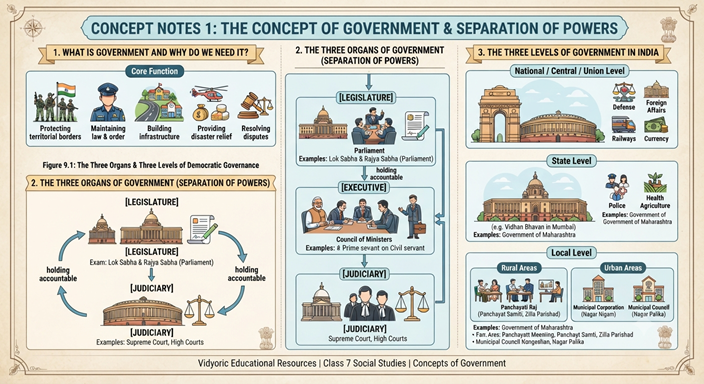
Figure 9.1: The Three Organs & Three Levels of Democratic Governance

1. What is Government and Why Do We Need It?

A Government is the formal institutional organization that exercises sovereign authority, formulates public policies, enacts laws, maintains public order, and administers the affairs of a state or community:

  • Core Functions:
  • Protecting territorial borders and maintaining national defense.
  • Maintaining domestic law, order, and police machinery.
  • Building social and physical infrastructure (roads, railways, power grids, schools, public hospitals).
  • Providing disaster relief during famines, earthquakes, floods, and epidemics.
  • Resolving civil and criminal disputes through judicial courts.

2. The Three Organs of Government (Separation of Powers)

To prevent tyranny and ensure mutual oversight, democratic governments distribute state authority across three distinct branches:

                      THE THREE ORGANS OF GOVERNMENT
                                    โ”‚
       โ”Œโ”€โ”€โ”€โ”€โ”€โ”€โ”€โ”€โ”€โ”€โ”€โ”€โ”€โ”€โ”€โ”€โ”€โ”€โ”€โ”€โ”€โ”€โ”€โ”€โ”€โ”€โ”€โ”€โ”ผโ”€โ”€โ”€โ”€โ”€โ”€โ”€โ”€โ”€โ”€โ”€โ”€โ”€โ”€โ”€โ”€โ”€โ”€โ”€โ”€โ”€โ”€โ”€โ”€โ”€โ”€โ”€โ”€โ”
       โ–ผ                            โ–ผ                            โ–ผ
 [ LEGISLATURE ]              [ EXECUTIVE ]               [ JUDICIARY ]
โ€ข Enacts and amends laws    โ€ข Implements and executes   โ€ข Interprets constitutional laws
โ€ข Approves state budget       statutes                    and statutes
โ€ข Holds cabinet accountable โ€ข Headed by Prime Minister, โ€ข Resolves disputes between
โ€ข Examples: Lok Sabha &       Council of Ministers, &     citizens and state
  Rajya Sabha (Parliament)    civil services (bureaucracy)โ€ข Supreme Court, High Courts

3. The Three Levels of Government in India

India's vast physical size and cultural diversity necessitate a three-tiered federal structure:

  1. National / Central / Union Level: Administers matters of national importance affecting the entire country (defense, foreign affairs, national highways, railways, currency, atomic energy). Headquartered at New Delhi.
  2. State Level: Administers matters concerning a specific state (police, public health, sanitation, agriculture, state roads). Examples: Government of Maharashtra, Government of Tamil Nadu.
  3. Local Level: Administers civic affairs of villages and urban towns:
  • Rural Areas: Panchayati Raj System (Gram Panchayat, Panchayat Samiti, Zilla Parishad).
  • Urban Areas: Municipal Corporations (Nagar Nigams) in big cities and Municipal Councils (Nagar Palikas) in smaller towns.
๐Ÿ“
Comprehensive High-Yield Mathematical Relations & Theorems

Complete step-by-step derivations, step traps, and LaTeX formula sheet breakdowns...

๐Ÿ”’

End of Free Notes Preview

Unlock the complete deck to access full LaTeX formula breakdowns, interactive diagrams, exam traps, and personal margin highlights!

๐Ÿ”‘ Sign In / Register Free
๐Ÿง  Review Due (Interval: 1 Day) Card 1 of 8 (SM-2 Active Recall)
QUESTION (FRONT) Space โ†ต to flip
What is the primary function of the Legislature in a democratic government?
ANSWER & EXPLANATION (BACK) Space โ†ต to flip
To debate, formulate, enact, and amend the laws of the nation, and approve the public budget.
๐Ÿ’ก
Tap Card to Flip & Check Your Answer Active recall prompt: Flip the card or press Space โ†ต to unlock the SM-2 recall difficulty rating.
๐Ÿ”’
Step 4 is Locked

Final Comprehensive Diagnostic Assessment (15 MCQs)

This ๐Ÿ“ LaTeX Concept Notes is part of the full verified curriculum for Part 1 โ€ข Chapter 9: From the Rulers to the Ruled: Types of Governments. Unlock the full deck to gain permanent access to all 11 interactive stages, active recall cards, and diagnostic checkpoints.

Deck Access Price
100% Free with Account
Instant Access
โœ“ UPI & Cards Supported
๐Ÿ”‘ Sign In / Register to Unlock Free →
๐Ÿ”’
Step 5 is Locked

Final Comprehensive Diagnostic Assessment (15 MCQs)

This โšก Diagnostic Quiz is part of the full verified curriculum for Part 1 โ€ข Chapter 9: From the Rulers to the Ruled: Types of Governments. Unlock the full deck to gain permanent access to all 11 interactive stages, active recall cards, and diagnostic checkpoints.

Deck Access Price
100% Free with Account
Instant Access
โœ“ UPI & Cards Supported
๐Ÿ”‘ Sign In / Register to Unlock Free →
๐Ÿ”’
Step 6 is Locked

Final Comprehensive Diagnostic Assessment (15 MCQs)

This Microlearning Step is part of the full verified curriculum for Part 1 โ€ข Chapter 9: From the Rulers to the Ruled: Types of Governments. Unlock the full deck to gain permanent access to all 11 interactive stages, active recall cards, and diagnostic checkpoints.

Deck Access Price
100% Free with Account
Instant Access
โœ“ UPI & Cards Supported
๐Ÿ”‘ Sign In / Register to Unlock Free →
๐Ÿ”’
Step 7 is Locked

Final Comprehensive Diagnostic Assessment (15 MCQs)

This ๐ŸŽฅ Video Lesson is part of the full verified curriculum for Part 1 โ€ข Chapter 9: From the Rulers to the Ruled: Types of Governments. Unlock the full deck to gain permanent access to all 11 interactive stages, active recall cards, and diagnostic checkpoints.

Deck Access Price
100% Free with Account
Instant Access
โœ“ UPI & Cards Supported
๐Ÿ”‘ Sign In / Register to Unlock Free →
๐Ÿ”’
Step 8 is Locked

Final Comprehensive Diagnostic Assessment (15 MCQs)

This ๐Ÿ“ LaTeX Concept Notes is part of the full verified curriculum for Part 1 โ€ข Chapter 9: From the Rulers to the Ruled: Types of Governments. Unlock the full deck to gain permanent access to all 11 interactive stages, active recall cards, and diagnostic checkpoints.

Deck Access Price
100% Free with Account
Instant Access
โœ“ UPI & Cards Supported
๐Ÿ”‘ Sign In / Register to Unlock Free →
๐Ÿ”’
Step 9 is Locked

Final Comprehensive Diagnostic Assessment (15 MCQs)

This ๐Ÿง  Active Recall Flashcards is part of the full verified curriculum for Part 1 โ€ข Chapter 9: From the Rulers to the Ruled: Types of Governments. Unlock the full deck to gain permanent access to all 11 interactive stages, active recall cards, and diagnostic checkpoints.

Deck Access Price
100% Free with Account
Instant Access
โœ“ UPI & Cards Supported
๐Ÿ”‘ Sign In / Register to Unlock Free →
๐Ÿ”’
Step 10 is Locked

Final Comprehensive Diagnostic Assessment (15 MCQs)

This ๐Ÿ“ LaTeX Concept Notes is part of the full verified curriculum for Part 1 โ€ข Chapter 9: From the Rulers to the Ruled: Types of Governments. Unlock the full deck to gain permanent access to all 11 interactive stages, active recall cards, and diagnostic checkpoints.

Deck Access Price
100% Free with Account
Instant Access
โœ“ UPI & Cards Supported
๐Ÿ”‘ Sign In / Register to Unlock Free →
๐Ÿ”’
Step 11 is Locked

Final Comprehensive Diagnostic Assessment (15 MCQs)

This โšก Diagnostic Quiz is part of the full verified curriculum for Part 1 โ€ข Chapter 9: From the Rulers to the Ruled: Types of Governments. Unlock the full deck to gain permanent access to all 11 interactive stages, active recall cards, and diagnostic checkpoints.

Deck Access Price
100% Free with Account
Instant Access
โœ“ UPI & Cards Supported
๐Ÿ”‘ Sign In / Register to Unlock Free →