Part 1 โ€ข Chapter 10: The Constitution of India: An Introduction
๐Ÿ‡ฎ๐Ÿ‡ณ National Curriculum Standard โ–พ
๐Ÿ› Vidyoric Certified โ€ข Dr. Meenakshi Sundaram
๐Ÿ”ฅ 0 days
โšก 0 Sparks +
Part 1 โ€ข Chapter 10: The Constitution of India: An Introduction

Video Lecture 1: The Sacred Compass โ€” Why India Needs a Constitution

STEP 1: VIDEO LESSON ๐Ÿ“ค Uploaded HTML5 Video

๐Ÿ“‘ Interactive Chapter Bookmarks

6 chapters
00:00
Introduction & Overview

Syllabus scope and core objectives

โ–ถ
01:15
Why Do we Need Rule ?

Detailed physical mechanism and derivations

โ–ถ
02:16
What Is Constitution?

High-yield board tips and pitfalls

โ–ถ
03:47
Draffing The Document
โ–ถ
05:37
Value And Influence
โ–ถ
07:10
The Enduring Power
โ–ถ

๐ŸŽ™๏ธ Synchronized Transcript

๐Ÿ”
Imagine a football match without rules. If players could use their hands whenever they wanted or change the rules to suit themselves, the game would quickly become chaotic. In the same way, a country needs a common set of rules to function peacefully and fairly. These fundamental rules are laid down in a document called the Constitution.

A Constitution is the supreme legal framework of a country. It explains how the government is formed, defines the powers and responsibilities of different institutions, limits government authority, and protects citizens' rights.

There are three major reasons why a country needs a Constitution.

First, it establishes the core ideals of the nation. The Indian Constitution aims to build a society based on justice, liberty, equality, and fraternity. It declares India to be a sovereign, socialist, secular, democratic republic.

Second, it defines and limits government powers. It explains the roles of the legislature, executive, and judiciary. This distribution of powers helps prevent any one institution or leader from becoming too powerful. Courts can also review government actions to ensure they follow the Constitution.

Third, it protects the rights of minorities and individuals. In a democracy, decisions are often made by majority vote. However, the majority cannot use its power to take away the basic rights of others. The Constitution protects everyone's fundamental rights, regardless of their religion, language, caste, or community.

Creating India's Constitution was a challenging task. After independence in 1947, India faced the difficulties of Partition, the integration of princely states, and the challenge of uniting people with different languages, religions, and cultures.

The Constituent Assembly was responsible for preparing the Constitution. Dr. B. R. Ambedkar chaired its Drafting Committee and played a central role in shaping the final document. The Assembly had 299 members when the Constitution was adopted. After nearly three years of discussion and debate, it was adopted on 26 November 1949 and came into effect on 26 January 1950.

The Indian Constitution is more than a rulebook. It protects democracy, limits power, promotes equality, and helps unite a diverse nation.

In the next step, we will explore how the Constitution was drafted and discover the artistic features of its original manuscript.
STEP 2 โ€ข CONCEPT NOTES โฑ๏ธ 3 min read
๐Ÿ“Œ 0 Notes

Concept Notes 1: Nature of a Constitution & The Constituent Assembly
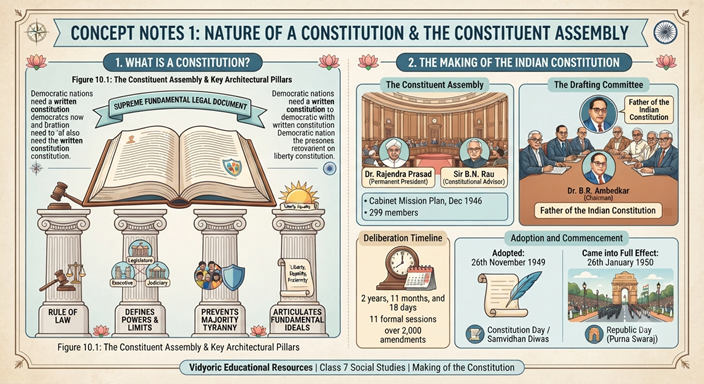
Figure 10.1: The Constituent Assembly & Key Architectural Pillars

1. What is a Constitution?

A Constitution is the supreme fundamental legal document of a nation that sets out the framework of governance, defines the powers of state organs, limits executive authority, and guarantees the rights of citizens:

  • Why Do Democratic Nations Need a Written Constitution?
  1. Rule of Law: Ensures that government is governed by established laws, not the personal whims of individual rulers.
  2. Defines Powers and Limits: Clearly delineates the boundaries of the Legislature, Executive, and Judiciary, preventing any organ from usurping dictatorial power.
  3. Prevents Majority Tyranny: Protects the linguistic, cultural, and religious rights of minorities against arbitrary majoritarian decisions.
  4. Articulates Fundamental Ideals: Enshrines the philosophical vision and collective aspirations of the people.

2. The Making of the Indian Constitution

  • The Constituent Assembly:
  • Constituted under the Cabinet Mission Plan in December 1946.
  • Total membership: 299 members following Partition.
  • Permanent President: Dr. Rajendra Prasad.
  • Constitutional Advisor: Sir B.N. Rau (prepared the initial legal drafts).
  • The Drafting Committee:
  • Appointed on 29th August 1947, comprising seven legal luminaries.
  • Chaired by Dr. Bhimrao Ramji Ambedkar, universally revered as the Father of the Indian Constitution.
  • Deliberation Timeline:
  • Took exactly 2 years, 11 months, and 18 days.
  • Held 11 formal sessions spanning 165 days of active debate; considered over 2,000 amendments.
  • Adoption and Commencement:
  • Adopted: 26th November 1949 (Celebrated annually as Constitution Day / Samvidhan Diwas).
  • Came into Full Effect: 26th January 1950 (Celebrated as Republic Day), commemorating the 1930 declaration of Purna Swaraj (Complete Independence).
๐Ÿ“
Comprehensive High-Yield Mathematical Relations & Theorems

Complete step-by-step derivations, step traps, and LaTeX formula sheet breakdowns...

๐Ÿ”’

End of Free Notes Preview

Unlock the complete deck to access full LaTeX formula breakdowns, interactive diagrams, exam traps, and personal margin highlights!

๐Ÿ”‘ Sign In / Register Free
๐Ÿง  Review Due (Interval: 1 Day) Card 1 of 8 (SM-2 Active Recall)
QUESTION (FRONT) Space โ†ต to flip
What is a Constitution?
ANSWER & EXPLANATION (BACK) Space โ†ต to flip
The supreme fundamental legal document of a nation that sets out the framework of governance, limits state power, and guarantees citizen rights.
๐Ÿ’ก
Tap Card to Flip & Check Your Answer Active recall prompt: Flip the card or press Space โ†ต to unlock the SM-2 recall difficulty rating.
๐Ÿ”’
Step 4 is Locked

Final Comprehensive Diagnostic Assessment (15 MCQs)

This ๐Ÿ“ LaTeX Concept Notes is part of the full verified curriculum for Part 1 โ€ข Chapter 10: The Constitution of India: An Introduction. Unlock the full deck to gain permanent access to all 11 interactive stages, active recall cards, and diagnostic checkpoints.

Deck Access Price
100% Free with Account
Instant Access
โœ“ UPI & Cards Supported
๐Ÿ”‘ Sign In / Register to Unlock Free →
๐Ÿ”’
Step 5 is Locked

Final Comprehensive Diagnostic Assessment (15 MCQs)

This โšก Diagnostic Quiz is part of the full verified curriculum for Part 1 โ€ข Chapter 10: The Constitution of India: An Introduction. Unlock the full deck to gain permanent access to all 11 interactive stages, active recall cards, and diagnostic checkpoints.

Deck Access Price
100% Free with Account
Instant Access
โœ“ UPI & Cards Supported
๐Ÿ”‘ Sign In / Register to Unlock Free →
๐Ÿ”’
Step 6 is Locked

Final Comprehensive Diagnostic Assessment (15 MCQs)

This Microlearning Step is part of the full verified curriculum for Part 1 โ€ข Chapter 10: The Constitution of India: An Introduction. Unlock the full deck to gain permanent access to all 11 interactive stages, active recall cards, and diagnostic checkpoints.

Deck Access Price
100% Free with Account
Instant Access
โœ“ UPI & Cards Supported
๐Ÿ”‘ Sign In / Register to Unlock Free →
๐Ÿ”’
Step 7 is Locked

Final Comprehensive Diagnostic Assessment (15 MCQs)

This ๐ŸŽฅ Video Lesson is part of the full verified curriculum for Part 1 โ€ข Chapter 10: The Constitution of India: An Introduction. Unlock the full deck to gain permanent access to all 11 interactive stages, active recall cards, and diagnostic checkpoints.

Deck Access Price
100% Free with Account
Instant Access
โœ“ UPI & Cards Supported
๐Ÿ”‘ Sign In / Register to Unlock Free →
๐Ÿ”’
Step 8 is Locked

Final Comprehensive Diagnostic Assessment (15 MCQs)

This ๐Ÿ“ LaTeX Concept Notes is part of the full verified curriculum for Part 1 โ€ข Chapter 10: The Constitution of India: An Introduction. Unlock the full deck to gain permanent access to all 11 interactive stages, active recall cards, and diagnostic checkpoints.

Deck Access Price
100% Free with Account
Instant Access
โœ“ UPI & Cards Supported
๐Ÿ”‘ Sign In / Register to Unlock Free →
๐Ÿ”’
Step 9 is Locked

Final Comprehensive Diagnostic Assessment (15 MCQs)

This ๐Ÿง  Active Recall Flashcards is part of the full verified curriculum for Part 1 โ€ข Chapter 10: The Constitution of India: An Introduction. Unlock the full deck to gain permanent access to all 11 interactive stages, active recall cards, and diagnostic checkpoints.

Deck Access Price
100% Free with Account
Instant Access
โœ“ UPI & Cards Supported
๐Ÿ”‘ Sign In / Register to Unlock Free →
๐Ÿ”’
Step 10 is Locked

Final Comprehensive Diagnostic Assessment (15 MCQs)

This ๐Ÿ“ LaTeX Concept Notes is part of the full verified curriculum for Part 1 โ€ข Chapter 10: The Constitution of India: An Introduction. Unlock the full deck to gain permanent access to all 11 interactive stages, active recall cards, and diagnostic checkpoints.

Deck Access Price
100% Free with Account
Instant Access
โœ“ UPI & Cards Supported
๐Ÿ”‘ Sign In / Register to Unlock Free →
๐Ÿ”’
Step 11 is Locked

Final Comprehensive Diagnostic Assessment (15 MCQs)

This โšก Diagnostic Quiz is part of the full verified curriculum for Part 1 โ€ข Chapter 10: The Constitution of India: An Introduction. Unlock the full deck to gain permanent access to all 11 interactive stages, active recall cards, and diagnostic checkpoints.

Deck Access Price
100% Free with Account
Instant Access
โœ“ UPI & Cards Supported
๐Ÿ”‘ Sign In / Register to Unlock Free →