Part 2 โ€ข Chapter 1: The Story of Indian Farming
๐Ÿ‡ฎ๐Ÿ‡ณ National Curriculum Standard โ–พ
๐Ÿ› Vidyoric Certified โ€ข Dr. Meenakshi Sundaram
๐Ÿ”ฅ 0 days
โšก 0 Sparks +
Part 2 โ€ข Chapter 1: The Story of Indian Farming

Video Lecture 1: The Golden Harvest โ€” Ten Millennia of Indian Farming

STEP 1: VIDEO LESSON ๐Ÿ“ค Uploaded HTML5 Video

๐Ÿ“‘ Interactive Chapter Bookmarks

6 chapters
00:00
Introduction & Overview

Syllabus scope and core objectives

โ–ถ
01:31
Roots OF Farming

Detailed physical mechanism and derivations

โ–ถ
03:00
Agri Landscape

High-yield board tips and pitfalls

โ–ถ
04:47
Cropping Seasons
โ–ถ
06:00
Wisdom And Innovoation
โ–ถ
07:33
Looking To Future
โ–ถ

๐ŸŽ™๏ธ Synchronized Transcript

๐Ÿ”
Around ten thousand years ago, human life began to change significantly. Early humans gradually moved from hunting and gathering towards agriculture. They learned to grow crops, store food, and raise animals. This development allowed people to settle in permanent villages, build houses, make pottery, and develop more complex societies.

Archaeological sites such as Mehrgarh and Lahuradewa provide evidence of early farming practices in the Indian subcontinent. Remains of crops such as wheat, barley, and rice help us understand how agriculture developed over thousands of years.

Today, India has several types of farming, depending on climate, soil, land availability, and economic needs.

**First, primitive subsistence farming.** This includes shifting cultivation, also known as Jhum in parts of Northeast India. Farmers clear a small patch of land, grow crops for a limited period, and then move to another area while the earlier patch remains fallow. The land may recover during the fallow period, but very short cycles can damage soil and forests.

**Second, intensive subsistence farming.** This is practised in densely populated regions where farmers cultivate small plots of land using intensive labour, irrigation, and multiple cropping to produce more food.

**Third, commercial farming.** In this system, crops are grown mainly for sale in markets. Farmers may use machinery, improved seeds, fertilisers, and modern irrigation methods to increase production.

**Fourth, plantation agriculture.** A single major cash crop is cultivated on a large estate, often with facilities for processing. Tea plantations are common in Assam, coffee is grown in Karnataka, and rubber is cultivated in Kerala.

Indian agriculture also follows three major cropping seasons: Kharif, Rabi, and Zaid.

**The Kharif season** begins with the arrival of the southwest monsoon, usually around June or July. Crops are generally harvested between September and November. Rice, maize, cotton, jowar, and bajra are common Kharif crops.

**The Rabi season** begins after the monsoon, usually between October and December. These crops grow during the cooler months and are harvested in spring or early summer. Wheat, barley, mustard, and gram are important Rabi crops. Winter rainfall from Western Disturbances also benefits agriculture in northwestern India.

**The Zaid season** is a short summer cropping season between Rabi and Kharif. Farmers grow crops such as watermelon, muskmelon, cucumber, and some vegetables.

To conclude, Indian farming has evolved from early cultivation to diverse modern agricultural systems. Its success depends on understanding local conditions, choosing suitable crops, and managing natural resources wisely.

In the next step, we will explore the importance of millets, known as Shree Anna, and understand how the Green Revolution transformed Indian agriculture.
STEP 2 โ€ข CONCEPT NOTES โฑ๏ธ 3 min read
๐Ÿ“Œ 0 Notes

Concept Notes 1: Evolution of Indian Farming & Typologies of Agriculture
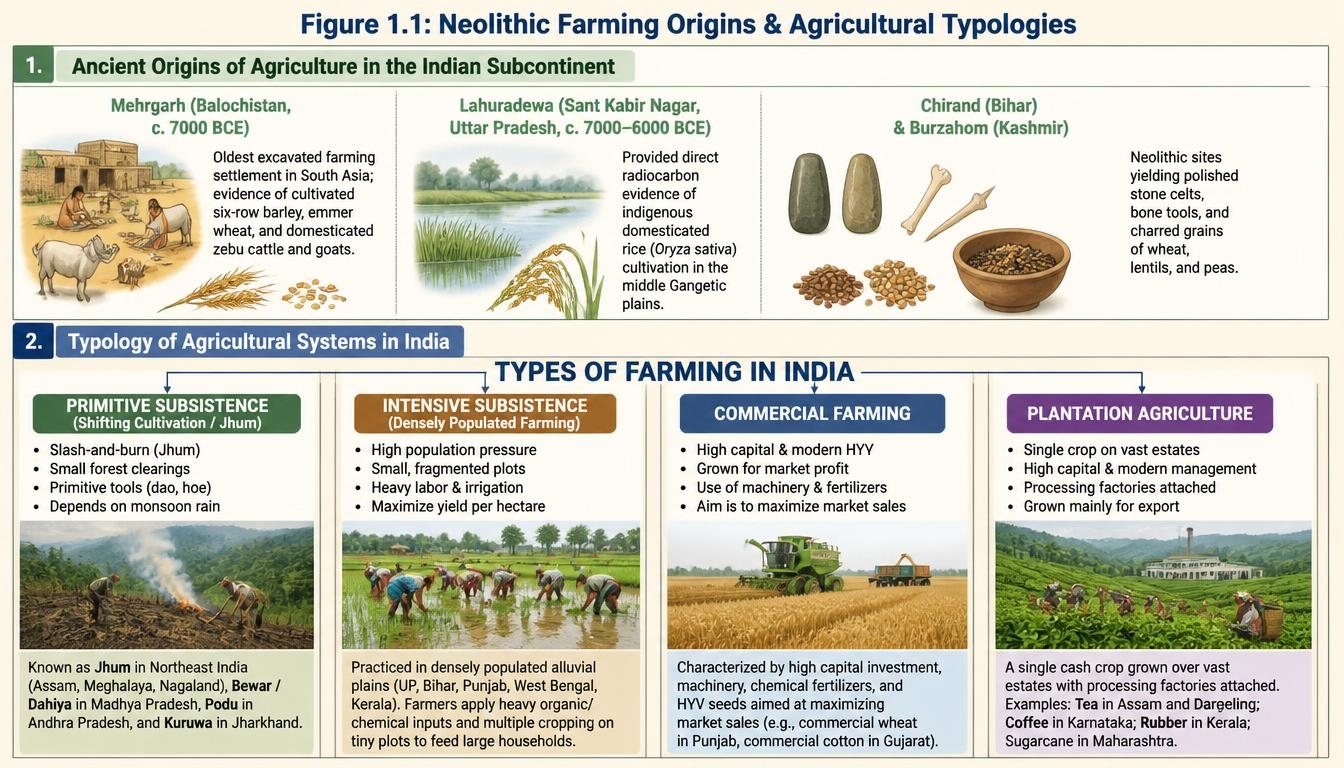
Figure 1.1: Neolithic Farming Origins & Agricultural Typologies

1. Ancient Origins of Agriculture in the Indian Subcontinent

Agriculture in India spans over nine millennia:

  • Mehrgarh (Balochistan, c. 7000 BCE): Oldest excavated farming settlement in South Asia; evidence of cultivated six-row barley, emmer wheat, and domesticated zebu cattle and goats.
  • Lahuradewa (Sant Kabir Nagar, Uttar Pradesh, c. 7000โ€“6000 BCE): Provided direct radiocarbon evidence of indigenous domesticated rice (Oryza sativa) cultivation in the middle Gangetic plains.
  • Chirand (Bihar) & Burzahom (Kashmir): Neolithic sites yielding polished stone celts, bone tools, and charred grains of wheat, lentils, and peas.

2. Typology of Agricultural Systems in India

                         TYPES OF FARMING IN INDIA
                                     โ”‚
       โ”Œโ”€โ”€โ”€โ”€โ”€โ”€โ”€โ”€โ”€โ”€โ”€โ”€โ”€โ”€โ”€โ”€โ”€โ”€โ”€โ”€โ”€โ”€โ”€โ”€โ”€โ”€โ”€โ”€โ”€โ”ผโ”€โ”€โ”€โ”€โ”€โ”€โ”€โ”€โ”€โ”€โ”€โ”€โ”€โ”€โ”€โ”€โ”€โ”€โ”€โ”€โ”€โ”€โ”€โ”€โ”€โ”€โ”€โ”€โ”€โ”
       โ–ผ                             โ–ผ                             โ–ผ
[ PRIMITIVE SUBSISTENCE ]     [ INTENSIVE SUBSISTENCE ]     [ COMMERCIAL & PLANTATION ]
โ€ข Slash-and-burn (Jhum)       โ€ข High population pressure    โ€ข High capital & modern HYV
โ€ข Small forest clearings      โ€ข Small, fragmented plots     โ€ข Grown for market profit
โ€ข Primitive tools (dao, hoe)  โ€ข Heavy labor & irrigation    โ€ข Plantations: Single crop on
โ€ข Depends on monsoon rain     โ€ข Maximize yield per hectare    vast estates (Tea, Coffee)
  1. Primitive Subsistence Farming (Shifting Cultivation / Jhum):
  • Known as Jhum in Northeast India (Assam, Meghalaya, Nagaland), Bewar / Dahiya in Madhya Pradesh, Podu in Andhra Pradesh, and Kuruwa in Jharkhand.
  • Farmers clear a patch of jungle by felling trees, burning undergrowth, sowing seeds in ash, and abandoning the plot after 2โ€“3 years when fertility declines.
  1. Intensive Subsistence Farming: Practiced in densely populated alluvial plains (UP, Bihar, Punjab, West Bengal, Kerala). Farmers apply heavy organic/chemical inputs and multiple cropping on tiny plots to feed large households.
  2. Commercial Farming: Characterized by high capital investment, machinery, chemical fertilizers, and HYV seeds aimed at maximizing market sales (e.g., commercial wheat in Punjab, commercial cotton in Gujarat).
  3. Plantation Agriculture: A single cash crop grown over vast estates with processing factories attached. Examples: Tea in Assam and Darjeeling; Coffee in Karnataka; Rubber in Kerala; Sugarcane in Maharashtra.
๐Ÿ“
Comprehensive High-Yield Mathematical Relations & Theorems

Complete step-by-step derivations, step traps, and LaTeX formula sheet breakdowns...

๐Ÿ”’

End of Free Notes Preview

Unlock the complete deck to access full LaTeX formula breakdowns, interactive diagrams, exam traps, and personal margin highlights!

๐Ÿ”‘ Sign In / Register Free
๐Ÿง  Review Due (Interval: 1 Day) Card 1 of 8 (SM-2 Active Recall)
QUESTION (FRONT) Space โ†ต to flip
Which archaeological site in South Asia provided the earliest evidence of wheat and barley farming around 7000 BCE?
ANSWER & EXPLANATION (BACK) Space โ†ต to flip
Mehrgarh (located in Balochistan).
๐Ÿ’ก
Tap Card to Flip & Check Your Answer Active recall prompt: Flip the card or press Space โ†ต to unlock the SM-2 recall difficulty rating.
๐Ÿ”’
Step 4 is Locked

Final Comprehensive Diagnostic Assessment (15 MCQs)

This ๐Ÿ“ LaTeX Concept Notes is part of the full verified curriculum for Part 2 โ€ข Chapter 1: The Story of Indian Farming. Unlock the full deck to gain permanent access to all 11 interactive stages, active recall cards, and diagnostic checkpoints.

Deck Access Price
100% Free with Account
Instant Access
โœ“ UPI & Cards Supported
๐Ÿ”‘ Sign In / Register to Unlock Free →
๐Ÿ”’
Step 5 is Locked

Final Comprehensive Diagnostic Assessment (15 MCQs)

This โšก Diagnostic Quiz is part of the full verified curriculum for Part 2 โ€ข Chapter 1: The Story of Indian Farming. Unlock the full deck to gain permanent access to all 11 interactive stages, active recall cards, and diagnostic checkpoints.

Deck Access Price
100% Free with Account
Instant Access
โœ“ UPI & Cards Supported
๐Ÿ”‘ Sign In / Register to Unlock Free →
๐Ÿ”’
Step 6 is Locked

Final Comprehensive Diagnostic Assessment (15 MCQs)

This Microlearning Step is part of the full verified curriculum for Part 2 โ€ข Chapter 1: The Story of Indian Farming. Unlock the full deck to gain permanent access to all 11 interactive stages, active recall cards, and diagnostic checkpoints.

Deck Access Price
100% Free with Account
Instant Access
โœ“ UPI & Cards Supported
๐Ÿ”‘ Sign In / Register to Unlock Free →
๐Ÿ”’
Step 7 is Locked

Final Comprehensive Diagnostic Assessment (15 MCQs)

This ๐ŸŽฅ Video Lesson is part of the full verified curriculum for Part 2 โ€ข Chapter 1: The Story of Indian Farming. Unlock the full deck to gain permanent access to all 11 interactive stages, active recall cards, and diagnostic checkpoints.

Deck Access Price
100% Free with Account
Instant Access
โœ“ UPI & Cards Supported
๐Ÿ”‘ Sign In / Register to Unlock Free →
๐Ÿ”’
Step 8 is Locked

Final Comprehensive Diagnostic Assessment (15 MCQs)

This ๐Ÿ“ LaTeX Concept Notes is part of the full verified curriculum for Part 2 โ€ข Chapter 1: The Story of Indian Farming. Unlock the full deck to gain permanent access to all 11 interactive stages, active recall cards, and diagnostic checkpoints.

Deck Access Price
100% Free with Account
Instant Access
โœ“ UPI & Cards Supported
๐Ÿ”‘ Sign In / Register to Unlock Free →
๐Ÿ”’
Step 9 is Locked

Final Comprehensive Diagnostic Assessment (15 MCQs)

This ๐Ÿง  Active Recall Flashcards is part of the full verified curriculum for Part 2 โ€ข Chapter 1: The Story of Indian Farming. Unlock the full deck to gain permanent access to all 11 interactive stages, active recall cards, and diagnostic checkpoints.

Deck Access Price
100% Free with Account
Instant Access
โœ“ UPI & Cards Supported
๐Ÿ”‘ Sign In / Register to Unlock Free →
๐Ÿ”’
Step 10 is Locked

Final Comprehensive Diagnostic Assessment (15 MCQs)

This ๐Ÿ“ LaTeX Concept Notes is part of the full verified curriculum for Part 2 โ€ข Chapter 1: The Story of Indian Farming. Unlock the full deck to gain permanent access to all 11 interactive stages, active recall cards, and diagnostic checkpoints.

Deck Access Price
100% Free with Account
Instant Access
โœ“ UPI & Cards Supported
๐Ÿ”‘ Sign In / Register to Unlock Free →
๐Ÿ”’
Step 11 is Locked

Final Comprehensive Diagnostic Assessment (15 MCQs)

This โšก Diagnostic Quiz is part of the full verified curriculum for Part 2 โ€ข Chapter 1: The Story of Indian Farming. Unlock the full deck to gain permanent access to all 11 interactive stages, active recall cards, and diagnostic checkpoints.

Deck Access Price
100% Free with Account
Instant Access
โœ“ UPI & Cards Supported
๐Ÿ”‘ Sign In / Register to Unlock Free →