Part 2 โ€ข Chapter 8: Banks and the Magic of Finance
๐Ÿ‡ฎ๐Ÿ‡ณ National Curriculum Standard โ–พ
๐Ÿ› Vidyoric Certified โ€ข Dr. Meenakshi Sundaram
๐Ÿ”ฅ 0 days
โšก 0 Sparks +
Part 2 โ€ข Chapter 8: Banks and the Magic of Finance

Video Lecture 1: The Magic of Credit โ€” How Banks Create Wealth

STEP 1: VIDEO LESSON ๐Ÿ“ค Uploaded HTML5 Video

๐Ÿ“‘ Interactive Chapter Bookmarks

6 chapters
00:00
Introduction & Overview

Syllabus scope and core objectives

โ–ถ
01:10
Financial Infrastruture

Detailed physical mechanism and derivations

โ–ถ
01:50
How Bamks Work

High-yield board tips and pitfalls

โ–ถ
03:09
Magic Of Compunding
โ–ถ
04:56
How Bank Make Money
โ–ถ
05:56
Regulation Access
โ–ถ

๐ŸŽ™๏ธ Synchronized Transcript

๐Ÿ”
Have you ever wondered what happens to the money you deposit in a bank? Does it remain locked inside a safe, or does the bank use it for something else?

Banks act as financial intermediaries between two groups: depositors and borrowers.

Depositors are people who save money in banks. Borrowers are individuals or businesses that need money for purposes such as starting a business, purchasing machinery, buying a house, or paying for education.

Banks collect savings from many people and use a portion of these funds to provide loans. They also maintain reserves and sufficient liquidity to meet customers' withdrawal needs.

Banks pay interest to depositors for keeping their money in savings accounts or other deposit schemes. At the same time, they charge borrowers interest on loans.

For example, a bank may pay 4% interest on certain deposits while charging 9% interest on a particular loan. The difference between these rates is called the interest spread. It helps the bank cover operating expenses, manage risks, and earn income.

This process of collecting deposits and providing loans supports economic activities. Farmers can purchase equipment, businesses can expand, and students can finance their education.

Banks offer different types of accounts to meet different financial needs.

A Savings Account is mainly designed for individuals who want to save money while earning interest. It allows deposits and withdrawals and generally provides facilities such as ATM cards and digital banking.

A Current Account is commonly used by businesses and traders who need to make frequent transactions. It usually offers flexible deposits and withdrawals, and may provide an overdraft facility. These accounts generally do not earn interest.

A Fixed Deposit, or FD, allows customers to deposit a lump sum for a fixed period. In return, the bank generally offers a higher interest rate than a regular savings account. Premature withdrawal may involve a penalty or reduced interest.

A Recurring Deposit, or RD, allows customers to deposit a fixed amount regularly, usually every month, for a chosen period. It helps people develop a regular saving habit and build a larger amount over time.

Each account serves a different purpose. Savings accounts support everyday saving, current accounts support business transactions, fixed deposits help save a lump sum, and recurring deposits encourage regular monthly savings.

To summarise, banks play an important role in the economy by connecting savings with borrowing. They provide financial services, support businesses, and help individuals manage their money.

In our next lesson, we will explore the problems caused by informal moneylenders and understand how women's Self-Help Groups provide access to savings and credit.
STEP 2 โ€ข CONCEPT NOTES โฑ๏ธ 3 min read
๐Ÿ“Œ 0 Notes

Concept Notes 1: The Banking System & The Mechanics of Credit
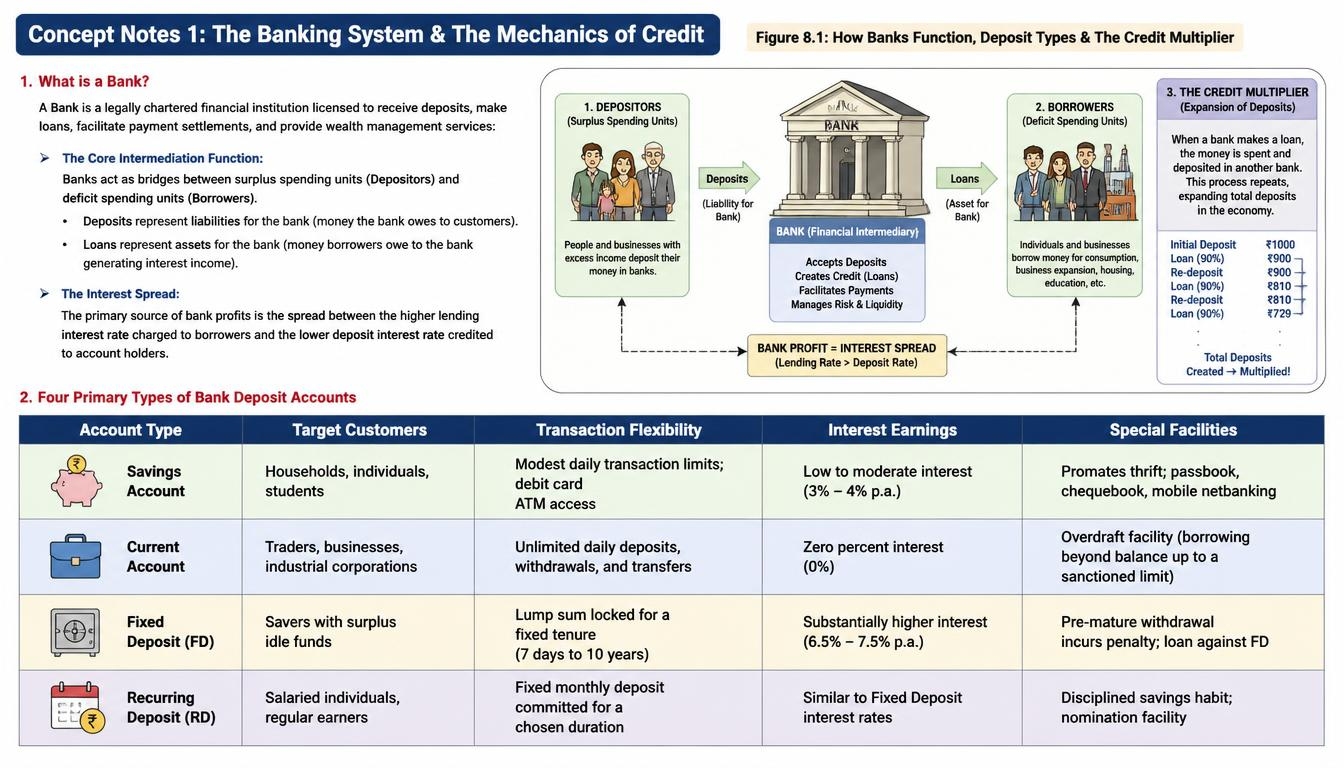
Figure 8.1: How Banks Function, Deposit Types & The Credit Multiplier

1. What is a Bank?

A Bank is a legally chartered financial institution licensed to receive deposits, make loans, facilitate payment settlements, and provide wealth management services:

  • The Core Intermediation Function:
  • Banks act as bridges between surplus spending units (Depositors) and deficit spending units (Borrowers).
  • Deposits represent liabilities for the bank (money the bank owes to customers).
  • Loans represent assets for the bank (money borrowers owe to the bank generating interest income).
  • The Interest Spread: The primary source of bank profits is the spread between the higher lending interest rate charged to borrowers and the lower deposit interest rate credited to account holders.

2. Four Primary Types of Bank Deposit Accounts

Account TypeTarget CustomersTransaction FlexibilityInterest EarningsSpecial Facilities
Savings AccountHouseholds, individuals, studentsModest daily transaction limits; debit card ATM accessLow to moderate interest ($3\% - 4\%$ p.a.)Promotes thrift; passbook, chequebook, mobile netbanking
Current AccountTraders, businesses, industrial corporationsUnlimited daily deposits, withdrawals, and transfersZero percent interest ($0\%$)Overdraft facility (borrowing beyond balance up to a sanctioned limit)
Fixed Deposit (FD)Savers with surplus idle fundsLump sum locked for a fixed tenure (7 days to 10 years)Substantially higher interest ($6.5\% - 7.5\%$ p.a.)Pre-mature withdrawal incurs penalty; loan against FD
Recurring Deposit (RD)Salaried individuals, regular earnersFixed monthly deposit committed for a chosen durationSimilar to Fixed Deposit interest ratesHelps accumulate capital systematically over time
๐Ÿ“
Comprehensive High-Yield Mathematical Relations & Theorems

Complete step-by-step derivations, step traps, and LaTeX formula sheet breakdowns...

๐Ÿ”’

End of Free Notes Preview

Unlock the complete deck to access full LaTeX formula breakdowns, interactive diagrams, exam traps, and personal margin highlights!

๐Ÿ”‘ Sign In / Register Free
๐Ÿง  Review Due (Interval: 1 Day) Card 1 of 8 (SM-2 Active Recall)
QUESTION (FRONT) Space โ†ต to flip
What is the primary economic function of a commercial bank?
ANSWER & EXPLANATION (BACK) Space โ†ต to flip
To act as a financial intermediary that accepts deposits from savers and grants loans and credit to borrowers.
๐Ÿ’ก
Tap Card to Flip & Check Your Answer Active recall prompt: Flip the card or press Space โ†ต to unlock the SM-2 recall difficulty rating.
๐Ÿ”’
Step 4 is Locked

Final Comprehensive Diagnostic Assessment (15 MCQs)

This ๐Ÿ“ LaTeX Concept Notes is part of the full verified curriculum for Part 2 โ€ข Chapter 8: Banks and the Magic of Finance. Unlock the full deck to gain permanent access to all 11 interactive stages, active recall cards, and diagnostic checkpoints.

Deck Access Price
100% Free with Account
Instant Access
โœ“ UPI & Cards Supported
๐Ÿ”‘ Sign In / Register to Unlock Free →
๐Ÿ”’
Step 5 is Locked

Final Comprehensive Diagnostic Assessment (15 MCQs)

This โšก Diagnostic Quiz is part of the full verified curriculum for Part 2 โ€ข Chapter 8: Banks and the Magic of Finance. Unlock the full deck to gain permanent access to all 11 interactive stages, active recall cards, and diagnostic checkpoints.

Deck Access Price
100% Free with Account
Instant Access
โœ“ UPI & Cards Supported
๐Ÿ”‘ Sign In / Register to Unlock Free →
๐Ÿ”’
Step 6 is Locked

Final Comprehensive Diagnostic Assessment (15 MCQs)

This Microlearning Step is part of the full verified curriculum for Part 2 โ€ข Chapter 8: Banks and the Magic of Finance. Unlock the full deck to gain permanent access to all 11 interactive stages, active recall cards, and diagnostic checkpoints.

Deck Access Price
100% Free with Account
Instant Access
โœ“ UPI & Cards Supported
๐Ÿ”‘ Sign In / Register to Unlock Free →
๐Ÿ”’
Step 7 is Locked

Final Comprehensive Diagnostic Assessment (15 MCQs)

This ๐ŸŽฅ Video Lesson is part of the full verified curriculum for Part 2 โ€ข Chapter 8: Banks and the Magic of Finance. Unlock the full deck to gain permanent access to all 11 interactive stages, active recall cards, and diagnostic checkpoints.

Deck Access Price
100% Free with Account
Instant Access
โœ“ UPI & Cards Supported
๐Ÿ”‘ Sign In / Register to Unlock Free →
๐Ÿ”’
Step 8 is Locked

Final Comprehensive Diagnostic Assessment (15 MCQs)

This ๐Ÿ“ LaTeX Concept Notes is part of the full verified curriculum for Part 2 โ€ข Chapter 8: Banks and the Magic of Finance. Unlock the full deck to gain permanent access to all 11 interactive stages, active recall cards, and diagnostic checkpoints.

Deck Access Price
100% Free with Account
Instant Access
โœ“ UPI & Cards Supported
๐Ÿ”‘ Sign In / Register to Unlock Free →
๐Ÿ”’
Step 9 is Locked

Final Comprehensive Diagnostic Assessment (15 MCQs)

This ๐Ÿง  Active Recall Flashcards is part of the full verified curriculum for Part 2 โ€ข Chapter 8: Banks and the Magic of Finance. Unlock the full deck to gain permanent access to all 11 interactive stages, active recall cards, and diagnostic checkpoints.

Deck Access Price
100% Free with Account
Instant Access
โœ“ UPI & Cards Supported
๐Ÿ”‘ Sign In / Register to Unlock Free →
๐Ÿ”’
Step 10 is Locked

Final Comprehensive Diagnostic Assessment (15 MCQs)

This ๐Ÿ“ LaTeX Concept Notes is part of the full verified curriculum for Part 2 โ€ข Chapter 8: Banks and the Magic of Finance. Unlock the full deck to gain permanent access to all 11 interactive stages, active recall cards, and diagnostic checkpoints.

Deck Access Price
100% Free with Account
Instant Access
โœ“ UPI & Cards Supported
๐Ÿ”‘ Sign In / Register to Unlock Free →
๐Ÿ”’
Step 11 is Locked

Final Comprehensive Diagnostic Assessment (15 MCQs)

This โšก Diagnostic Quiz is part of the full verified curriculum for Part 2 โ€ข Chapter 8: Banks and the Magic of Finance. Unlock the full deck to gain permanent access to all 11 interactive stages, active recall cards, and diagnostic checkpoints.

Deck Access Price
100% Free with Account
Instant Access
โœ“ UPI & Cards Supported
๐Ÿ”‘ Sign In / Register to Unlock Free →